Space as the Next Frontier of Defense: Satellites, Security, and International Law
In 2024, over 10,000 active satellites orbited Earth, a 50% increase from five years prior, powering everything from GPS navigation to global internet access yet counter-space capabilities tested by nations like Russia, China, and the US generated debris fields threatening 1 in 10 of those assets. This collision of commercial boom and military testing marks space as defense's new frontier, where satellites enable security but also vulnerability. As the global space economy hit $613 billion in 2024, nations poured $29.6 billion into US Space Force alone for FY2025, signaling a rush to protect orbital assets amid legal debates over anti-satellite (ASAT) weapons and debris. This article examines satellites' dual role in security, evolving threats, and international law's neutral framework, drawing from research to analyze facts, data, and perspectives without bias.
Satellites: The Backbone of Modern Security
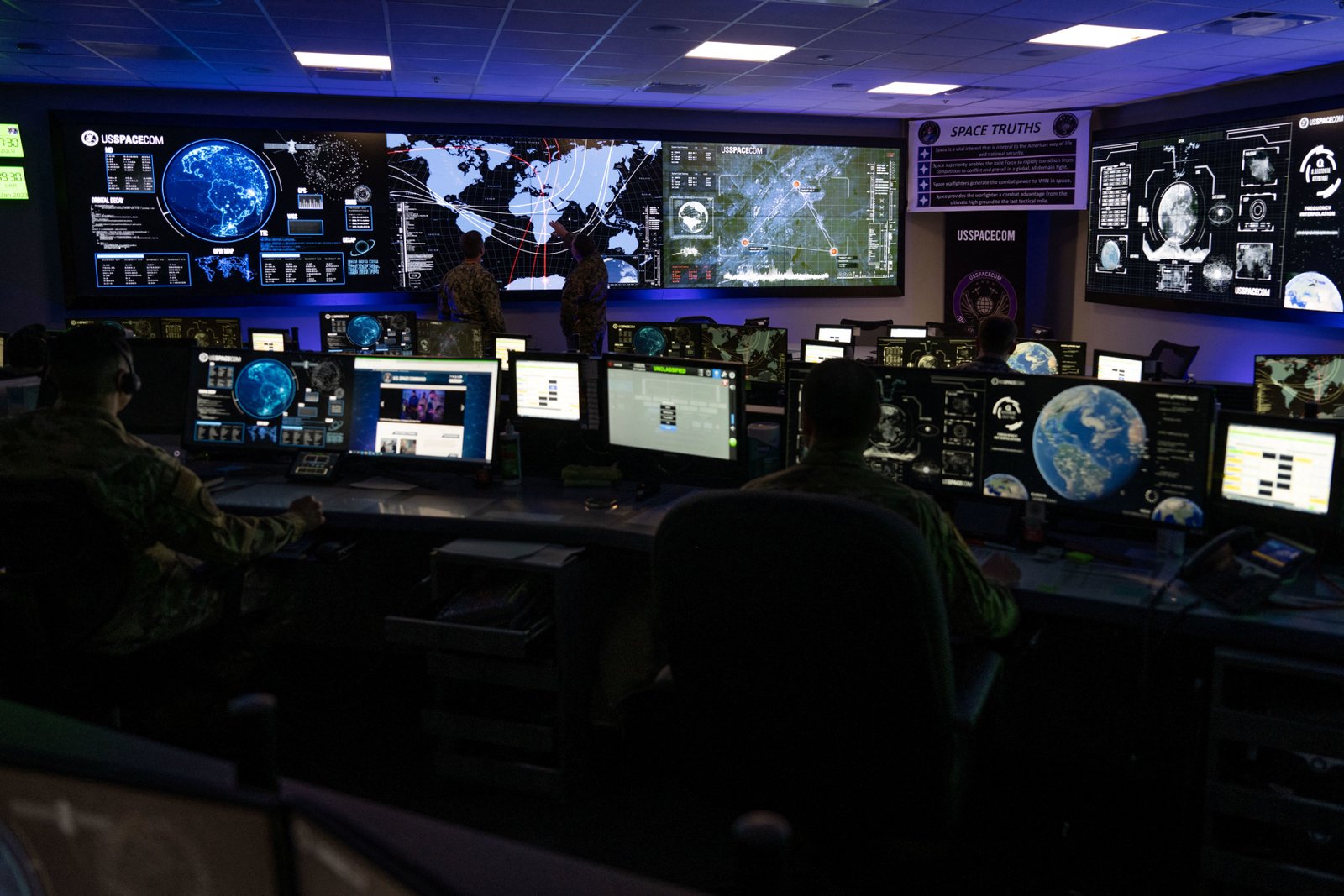
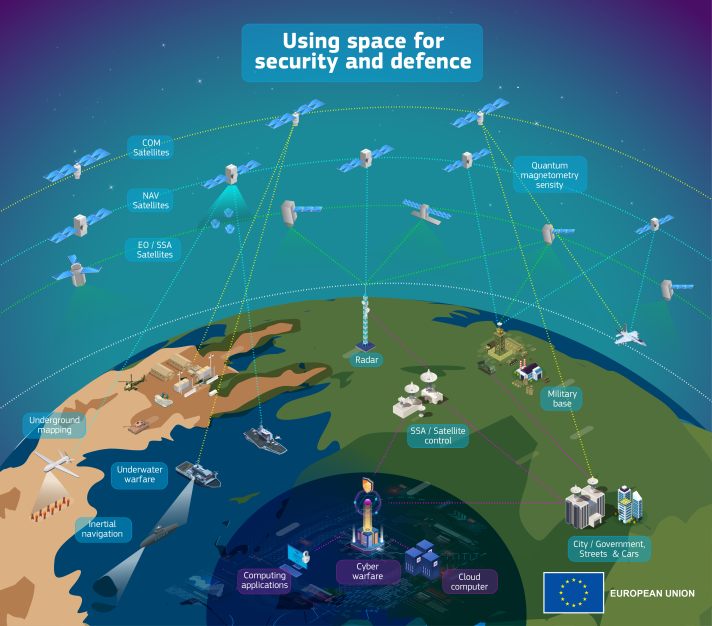
Satellites underpin defense through reconnaissance, secure communications, missile warning, and navigation. NATO notes over half of active satellites belong to its members or their companies, enabling real-time intel that enhances operations across domains. In 2025, proliferated constellations like Starshield (military Starlink variant) promise resilient networks, with defense anchoring 9% of 2024-2035 launches despite mega-constellations dominating volume.
Stats highlight reliance: space-based assets support 90% of modern military communications, per SIPRI, while GPS jamming incidents rose 300% in conflict zones since 2022. Germany's 2025 Space Security Strategy calls for "effectors" to counter threats, reflecting Europe's push for independent capabilities amid NATO integration. Commercial players like SpaceX blur lines, providing Pentagon launches while operating dual-use networks.
Emerging Threats: From Jamming to ASAT
Space threats span non-kinetic (jamming, cyber hacks) to kinetic (ASAT missiles). Russia's 2021 ASAT test created 1,500+ debris pieces, endangering the ISS and prompting debris removal pledges from 53 nations by 2025. China's 2007 test generated 3,000+ fragments still orbiting, while India's 2019 test was lower-debris but sparked debate.
Non-kinetic risks proliferate: cyber intrusions hit satellite ground stations 20% more in 2024, per reports, with AI-enabled spoofing mimicking signals. SIPRI tracks direct-ascent ASAT (DA-ASAT), co-orbital killers, and lasers, noting Russia's Nudol and China's SC-19 systems. Market data projects space militarization from $48.9B in 2025 to $112.7B by 2034 at 9.7% CAGR, driven by hypersonic counters and AI autonomy.
| Threat Type | Examples | Debris/Impact Stats [Sources] |
|---|---|---|
| Kinetic ASAT | Russia 2021, China 2007 | 1,500-3,000 fragments; 10-year orbital risk |
| Cyber/Jamming | GPS disruptions | 300% rise; €500M maritime losses |
| Directed Energy | Lasers | Ground dazzlers tested; no debris but ops denial |
International Law: Foundations and Gaps
The 1967 Outer Space Treaty (OST) bans nuclear weapons in orbit and claims on celestial bodies, mandating "due regard" for others' interests (Art. IX). No explicit ASAT ban exists, but customary law via UN Charter Art. 2(4) prohibits force threats, allowing self-defense under Art. 51 if proportional.
Jus ad bellum limits ASAT: necessity requires targeting aggressor-linked military satellites only; proportionality weighs civilian harm and escalation. IHL applies via Additional Protocol I, protecting civilian objects dual-use sats pose challenges. UN Liability Convention holds states absolutely liable for surface damage from launches, fault-based in space.
Moratoriums gain traction: post-Russia test, US (2022), Russia (2022, reversed), China (no pledge) highlight uneven norms. Proposals include OST amendments for debris minimization.
NATO and Allied Strategies
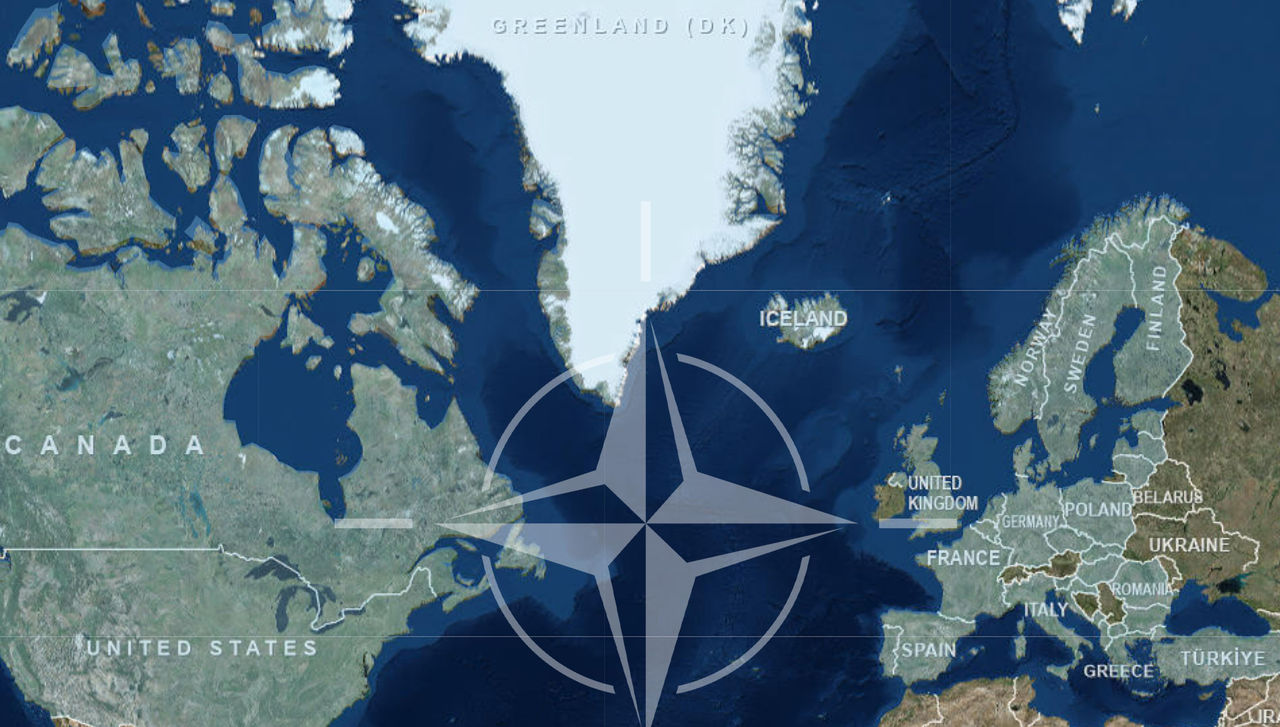
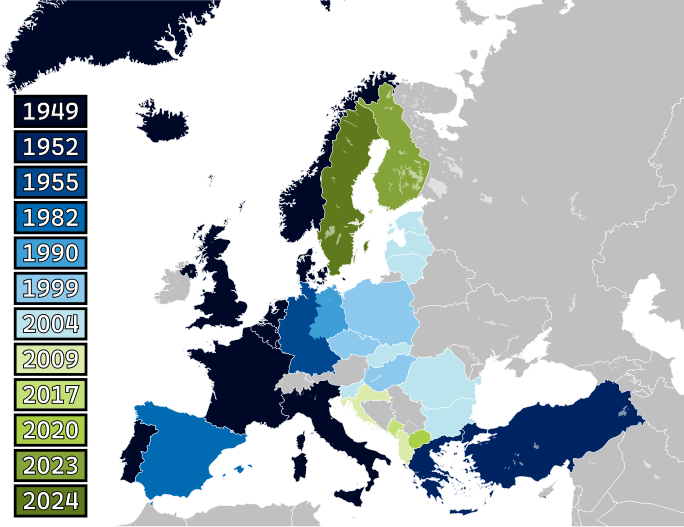
NATO's 2019 space domain declaration integrates it with air/land/sea/cyber, with 2025 Commercial Space Strategy leveraging private sector for resilience. Initiatives: NSS6G (€1B+ satcom), APSS (17 Allies, $1B+ surveillance constellation), NORTHLINK Arctic comms. Space Force FY25 budget emphasizes protected tactical satcom ($250M new line) for proliferated nets.
Europe advances: Germany's effectors strategy, NATO's 3SAS for situational awareness.
Challenges: contested access, with adversaries' counter-space tech risking denial.
Commercial Space: Opportunity and Risk
Private firms drive 66% of 2025-2034 launches via mega-constellations, but defense integrates: Starshield for US military. Risks include supply chain vulnerabilities; ITU regulates orbits, but security gaps persist. Ethical views: innovation boosts access, but militarization blurs civilian-military lines.
Data: Q2 2025 Space IQ notes Europe-wide investments fueled by tensions, NATO-wide.
Debris Crisis: A Ticking Orbital Bomb
36,000+ debris objects >10cm trackable in 2025, with ASAT tests contributing 10%. Kessler Syndrome risks cascade collisions, potentially un-usable LEO by 2030 without mitigation. Solutions: active removal (ESA's 2025 ClearSpace), guidelines.
Perspectives: ILA Draft Convention urges debris bans; critics note verification hurdles.
International Cooperation on Debris Mitigation
Efforts to tackle the space debris crisis hinge on global collaboration, blending government initiatives, private sector innovation, and international guidelines to prevent orbital overcrowding. The European Space Agency's (ESA) Space Environment Report 2025 highlights a pivotal shift: in 2024, controlled satellite re-entries outnumbered uncontrolled ones for the first time, driven by stricter passivation disabling fuel tanks to avoid explosions and reduced orbit lifetime standards. Commercial operators lead this trend, with mega-constellations like Starlink achieving 95% compliance in de-orbiting defunct satellites within five years, per IADC (Inter-Agency Space Debris Coordination Committee) metrics. Yet challenges persist: while 40,000 objects are tracked, over 1.2 million fragments larger than 1 cm evade monitoring, complicating collision avoidance maneuvers that occurred 500,000 times in 2024 alone.
Diverse stakeholders contribute uniquely. NASA's Orbital Debris Program tracks quarterly trends, noting rocket body populations stabilizing but fragmentation from collisions adding thousands yearly exemplified by the 2009 Iridium-Cosmos crash doubling low-Earth orbit (LEO) cataloged objects below 1,000 km. Private ventures like Astroscale pioneer active removal: their 2025 ELSA-d mission successfully captured and de-orbited a client debris object, proving magnetic docking feasibility and paving the way for commercial cleanup services projected to reach $1.75 billion by 2029. UNOOSA's COPUOS pushes for binding norms, with 2025 resolutions urging zero new debris from tests; 53 nations pledged moratoriums post-Russia's 2021 ASAT, though enforcement lags.
Neutral analyses reveal tensions: developing nations argue wealthier spacefaring states bear historical responsibility for 80% of debris, advocating tech transfers via the Artemis Accords, now signed by 45 countries. Economic incentives align interests the debris monitoring market grew from $1.21 billion in 2024 to $1.32 billion in 2025, funding radar networks like ESA's Space Debris Data Centre. Success stories include Japan's 2026 ADRAS-J robotic arm capturing upper stages, reducing long-lived objects by 15% in test orbits. This cooperative model emphasizes prevention over reaction, with simulations showing full mitigation compliance could halve LEO collision risks by 2040, ensuring sustainable access for all.
Technological Innovations for Orbital Cleanup
Technological breakthroughs are transforming debris mitigation from aspiration to action, with robotics, lasers, and AI leading the charge against the orbital junkyard. ESA's ClearSpace-1, slated for 2026, targets a Vega rocket fairing among the top 50 most concerning objects using vision-based navigation to grasp and de-orbit it, a milestone in non-cooperative capture validated in 2025 ground tests. Laser ablation emerges as a debris-free alternative: ground-based systems vaporize tiny fragments (1-10 mm), imparting thrust for controlled re-entry; US Naval Research Lab prototypes demonstrated 20% velocity change on 1 cm targets in 2025 trials, potentially clearing 10,000 objects annually without launches.
AI-driven prediction models revolutionize tracking: University of Michigan's 2025 algorithms forecast conjunctions with 99% accuracy for sub-10 cm debris using multi-sensor fusion, enabling autonomous avoidance for CubeSats. Market dynamics fuel progress the active debris removal sector anticipates $1.75 billion by 2029, with net-shaped capture (e.g., Tethers Unlimited's Terminator Hose) ensnaring clusters up to 1 meter. Electro-dynamic tethers, dragging objects via Earth's magnetic field, offer low-cost solutions; Chinese experiments in 2025 de-orbited a 500 kg stage in 18 months, halving fuel needs.
Perspectives vary: optimists cite 2024's passivation improvements 90% of new launches now compliant curtailing explosion debris, while skeptics warn remediation scales poorly against 130 million fragments, necessitating international funding pools. Patent data shows 300+ filings in 2025 for hybrid robotic-laser systems, with startups like Orbit Fab refueling sats to extend operational life and reduce end-of-life clutter. Quantitative gains: ESA models predict these techs could stabilize LEO populations by 2035 if scaled, preventing the 10% annual debris growth observed in recent years. Balancing innovation with verification via ITU spectrum monitoring ensures equitable benefits, mitigating risks like dual-use tech proliferation.
Policy and Regulatory Frameworks for Sustainability
Robust policy frameworks underpin debris solutions, evolving from voluntary guidelines to potential treaties amid projections of 30,000 satellites by 2030 tripling collision hazards. The UN's 2025 Space Debris Guidelines, endorsed by COPUOS, mandate post-mission disposal within 25 years for LEO objects, with 80% global adherence in 2024 but gaps in state-owned legacy sats. FCC's 2022 five-year de-orbit rule for US licenses spurred compliance, reducing uncontrolled re-entries by 25%; similar EU proposals via Zero Debris Charter (signed by 75 entities) target zero new contributions by 2030.
Divergent views shape discourse: the IADC's 2002 standards emphasize < 0.1% failure probability for 25-year disposal, credited with stabilizing rocket body influx, yet critics from Global South nations decry inequities top debris creators (US, Russia, China) hold 90% of objects >10 cm. Regulatory innovations include debris taxes: France's 2024 proposal levies €1 million per uncontrolled re-entry, funding removal missions; economic models estimate this could reclaim €10 billion in orbital value annually. Bilateral pacts like US-Japan Artemis expand to debris norms, sharing tracking data from 36,000+ cataloged items.
Data underscores urgency: ESA forecasts Kessler Syndrome without intervention, rendering 550 km altitudes unusable as debris matches active payloads. Progress metrics 50% tracked debris rise over two decades slowed to 10% yearly via mitigation signal policy efficacy. Neutral forums like PARLOS advocate verification regimes, blending OST Art. IX "due regard" with binding ASAT bans. By harmonizing national regs (e.g., UK's 2025 Orbital Sustainability Act), these frameworks foster a shared-use commons, projecting 40% risk reduction by 2040 per NASA simulations.
Legal Debates: Self-Defense vs. Peace
ASAT in self-defense? Jus ad bellum necessity confines to aggressor military sats; proportionality may favor Earth targets to avoid space escalation. Dual-use sats complicate: commercial constellations resilient but targetable if militarized.
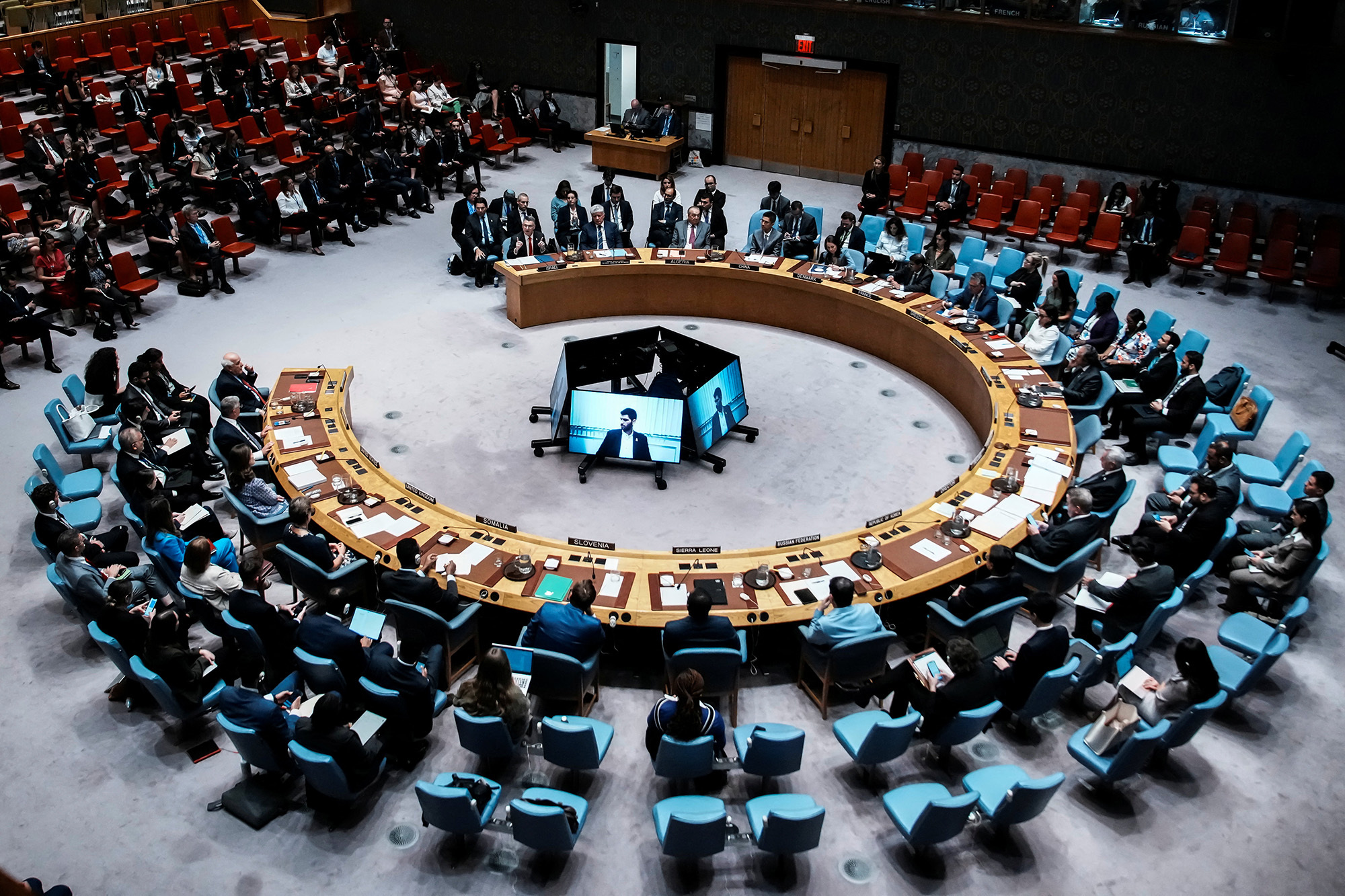
Views diverge: some push OST updates; others rely on existing norms. UN forums discuss PAROS (no space weapons).
Data Spotlight: Numbers Defining the Frontier
Active satellites: 10,000+ (2024), up 50%.
Space economy: $613B (2024).
US Space Force FY25: $29.6B.
Debris: 36,000+ objects.
ASAT tests: Russia 1,500 debris (2021).
Militarization market: $48.9B-$112.7B (2025-34).
Economic Impacts and Resilience
Space disruptions cost billions: jamming alone €500M/year maritime. Resilient architectures: proliferated sats reduce single-point failure by 70%. Investments: APSS $1B+.
Future Norms and Diplomacy
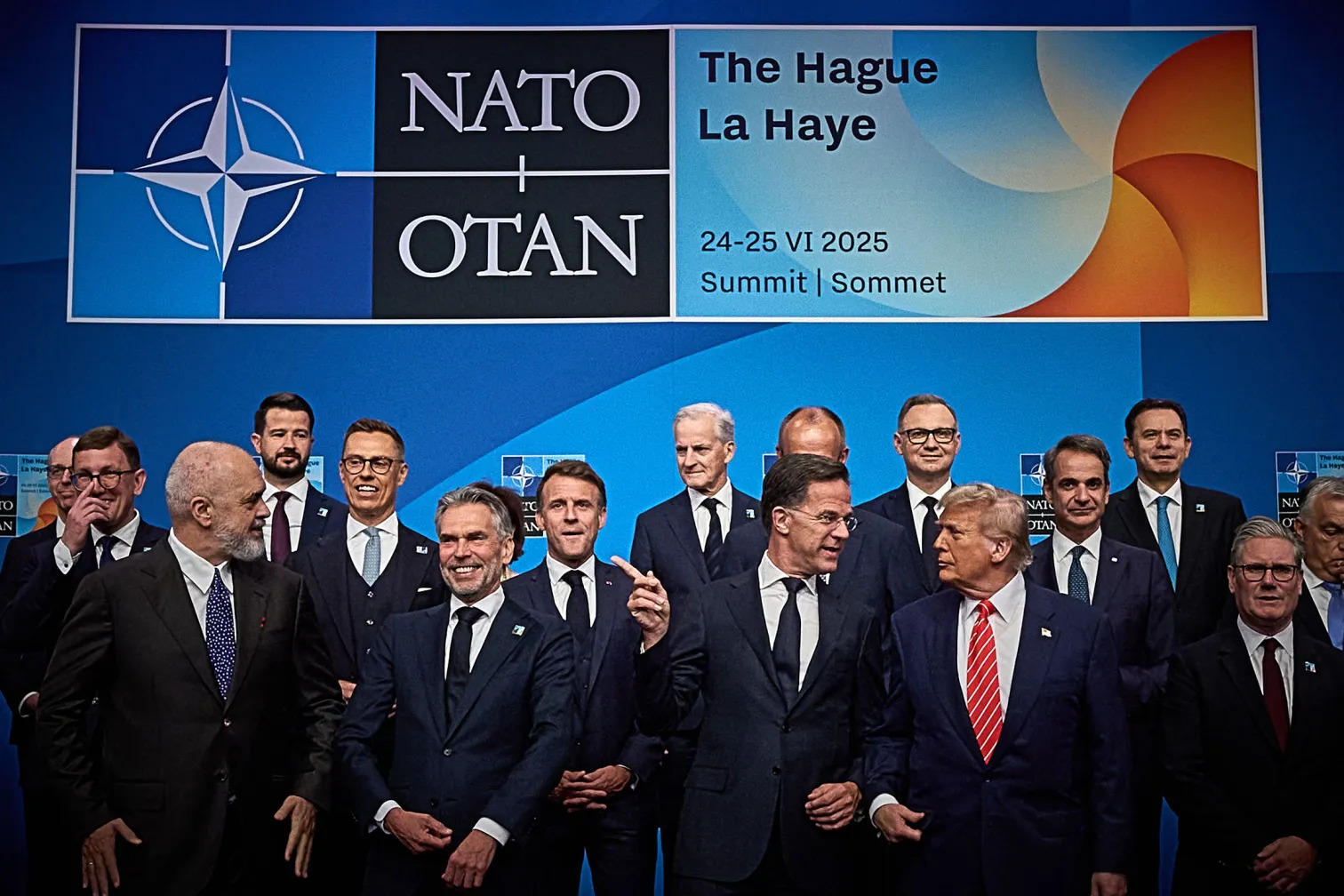
SIPRI urges DA-ASAT bans, lunar governance. 2025 Hague NATO Summit eyes commercial ties. Neutral path: multilateral verification.
References
1 - SIPRI. "Space security." 2025. https://www.sipri.org/research/armament-and-disarmament/weapons-mass-destruction/space-security
2 - Phys.org. "Existing international law can help secure peace in outer space." Apr 2025. https://phys.org/news/2025-04-international-law-peace-outer-space.html
3 - Leiden Journal. "Self-defence in outer space: Anti-satellite weapons." Oct 2025
4 - Just Security. "Balancing State Security and Peace in Outer Space." Apr 2025. https://www.justsecurity.org/110248/security-outer-space-international-law/
5 - Aerospace Corp. "FY 2025 Defense Space Budget." https://csps.aerospace.org/sites/default/files/2024-06/FY25BudgetBrief_20240605.pdf
6 - Lieber Institute. "Russia's ASAT Test and Space Law." Sep 2024 https://lieber.westpoint.edu/russia-asat-test-development-space-law/
7 - GlobeNewswire. "Space Militarization Market 2025-2034." Jul 2025. https://www.globenewswire.com/news-release/2025/07/03/3109727/...
8 - NATO. "NATO's approach to space." Jul 2025. https://www.nato.int/en/what-we-do/deterrence-and-defence/natos-approach-to-space
9 - Breaking Defense. "Germany's first space security strategy." Nov 2025. https://breakingdefense.com/2025/11/germanys-first-space-security-strategy...
10 - Space Foundation. "The Space Report 2025 Q2." Jul 2025. https://www.spacefoundation.org/2025/07/22/the-space-report-2025-q2/