The Tipping Point: Biodiversity Collapse as a National Security Threat
It sounds like the plot of a dystopian thriller: vital crops failing simultaneously across continents, grocery shelves stripped bare, and nations clashing over dwindling resources. Yet this scenario is no mere fiction it is a very real risk on our horizon if humanity continues on its current path. We are approaching an environmental tipping point, where the collapse of ecosystems could trigger shocks that unravel societies.
A New Kind of Security Threat
For years, vanishing species and shrinking forests were seen as environmental or moral concerns. Now, however, top security experts are sounding the alarm that nature’s unraveling threatens human stability. This stark warning crystallized recently when a UK government intelligence assessment originally suppressed for its grim outlook declared that accelerating nature loss is a foundational threat to global stability and national security. No longer the domain of conservationists alone, biodiversity loss has been reframed as a systemic risk on par with cyber warfare or nuclear proliferation.
The intelligence report lays out a “reasonable worst case scenario” for what unchecked ecosystem destruction could mean. Its conclusions are sobering. As natural systems falter, we face a future of cascading crises: crop failures, water shortages, pandemics, economic turmoil, and conflicts over resources. Crucial ecosystem “services” that we take for granted from pollination to flood control could rapidly diminish. Lieutenant General Richard Nugee, a former UK defense commander, noted that this assessment treats ecosystem collapse “with the seriousness it deserves, as a threat to our national security,” emphasizing a duty to urgently build resilience now that these risks are “systemic, unavoidable and already unfolding”. Notably, the report was compiled by the UK’s Joint Intelligence Committee the same body that oversees MI5 and MI6 reflecting how seriously the government now views ecological collapse as a security threat.
Ecosystems at a Tipping Point
Scientists have long warned that nature can take only so much pressure before it hits a tipping point a threshold beyond which damage becomes irreversible. We may now be at that threshold. The intelligence assessment bluntly states that every critical global ecosystem is on a path to collapse if current trends continue. Some could begin to fail as soon as 2030, including tropical coral reefs and the great northern boreal forests, with others like the Amazon rainforest and Congo basin following by mid century. In plain terms, humanity may witness the breakdown of entire regions: rainforests transforming into savannahs, fertile wetlands drying into deserts, vibrant seas turning into barren waters. Each of these ecosystems is vital not just for wildlife, but for human civilization. Take the Amazon, often called the “lungs of the planet.” It drives rainfall patterns across continents and stores vast carbon reserves. If the Amazon passes a climate tipping point and dries out, the consequences would ricochet globally including more frequent droughts and lost food production far beyond South America. Alarmingly, signs of such shifts are already emerging in the Amazon, which is showing early stress that some scientists fear presages an irreversible decline. Similarly, coral reef die offs in Southeast Asia would erode fisheries that feed millions, and melting Himalayan glaciers would jeopardize water supplies for a fifth of humanity.
We are also in the midst of a human driven mass extinction. A landmark UN backed study warned that roughly one million animal and plant species are now at risk of extinction a die off on a scale not seen in 10 million years. Losing this many species isn’t just a tragedy of biodiversity; it could trigger an ecological cascade where the loss of key “keystone” and “foundation” species causes whole ecosystems to unravel. In essence, we risk pushing nature beyond a point of no return, where declines become self perpetuating collapse. In effect, humanity is now precipitating Earth’s Sixth Mass Extinction a global die off driven not by an asteroid or volcano, but by human hands.
Cascading Risks to Global Stability
What would a collapse of nature mean for human society? The short answer: nothing good. Our modern civilization is entwined with the living world in ways we barely notice until they fail. If fisheries collapse and pollinators vanish, food production will falter. The UK assessment warns that without significant measures to boost resilience, the country may be unable to maintain food security in the face of global ecosystem collapse. The reason is simple: Britain, like many nations, relies heavily on imported food and fertilizers. In a future of droughts and failing harvests, countries could turn inward, hoarding food supplies. Geopolitical competition for basic resources like grain would intensify. As the report starkly puts it, if ecosystem collapse drives worldwide crop failures, no country will be immune from the fallout.
Indeed, climate change has already given us a preview of this fragility: extreme weather in 2025 led to one of the worst harvests on record in Britain and damaged crops across the countries that supply us with food staples. This contributed to rising supermarket prices essentially a cost of living crisis rooted in environmental breakdown. Now imagine those pressures multiplied: widespread droughts, fisheries wiped out by algae blooms, pollinator losses slashing fruit and vegetable yields. Food prices would spike globally, and scarcity could spark panic and protectionism. “It is unlikely the UK would be able to maintain food security if ecosystem collapse drives geopolitical competition for food,” the assessment concludes grimly.
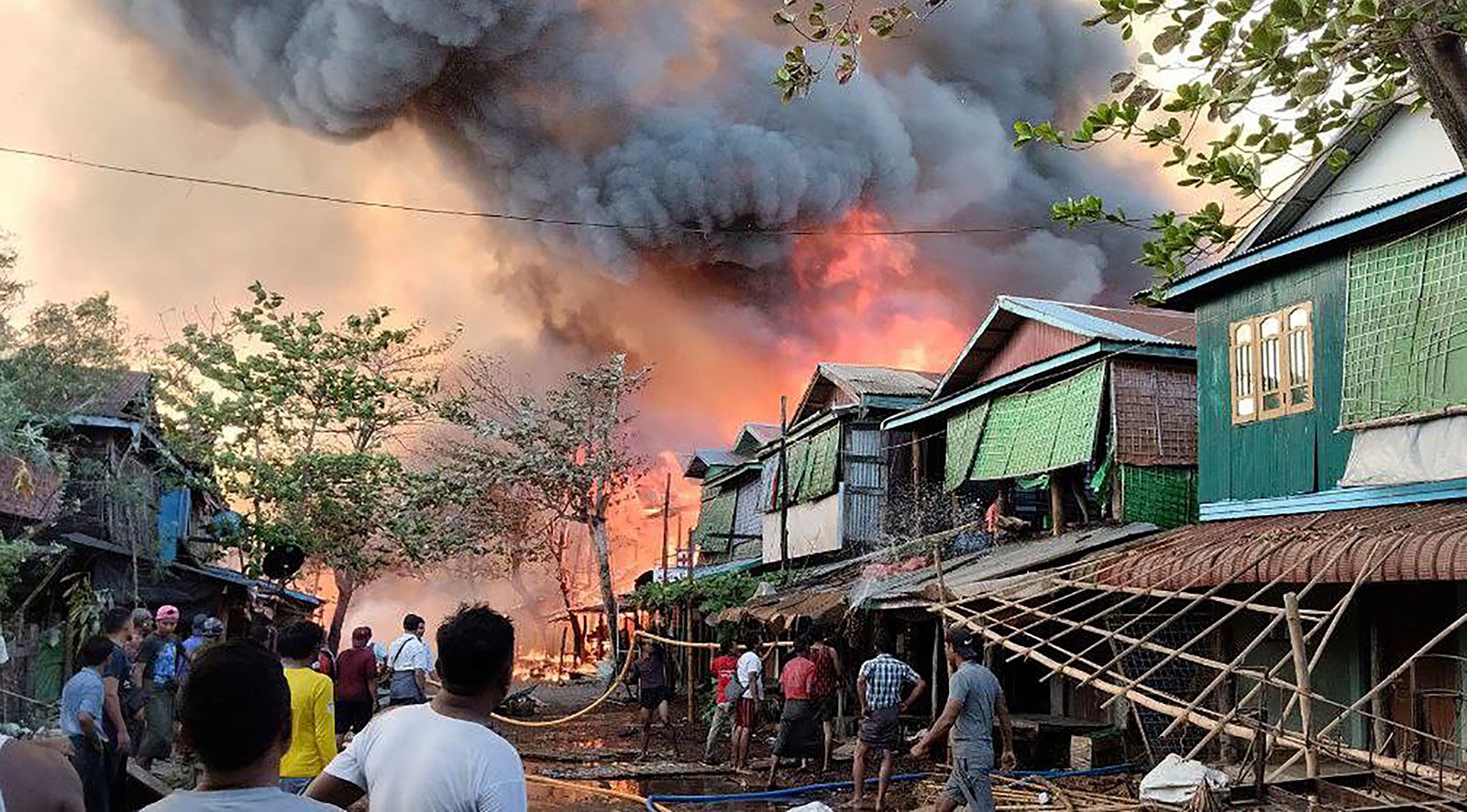
Beyond hunger, mass displacement and conflict are looming risks. When ecosystems fail, people are forced to move or face fight or flight choices. Regions crippled by desertification, failing agriculture or rising seas will see surges in migrants fleeing unlivable conditions. One analysis estimates that by 2050, ecological threats from droughts to soil loss could displace up to 1.2 billion people worldwide. Such unprecedented migration pressure would strain borders and possibly ignite new conflicts. As habitable land shrinks and competition for water and food grows, “conflict will become all but inevitable” in some areas. We have already seen how drought and crop failure can help fuel unrest and civil war in parts of Africa and the Middle East; on a larger scale, the security implications could be global.
Economic instability is another domino poised to fall. Ecosystem collapse would disrupt supply chains and trade on which all economies depend. Prices of key commodities could swing wildly, investment climates could sour, and states might enact export bans or resource controls, undermining global markets. Moreover, public health threats would likely escalate. Intact ecosystems naturally buffer humans from disease, but as we destroy habitats, we increase contact with wildlife and pathogens. Scientists warn that biodiversity loss heightens the risk of pandemics emerging, as seen when viruses jump from animals to humans. A world with collapsing biodiversity could be one where outbreaks of novel diseases become more frequent, further destabilizing societies.
In short, the collapse of nature spells chaos for human civilization: unstable food and water supplies, surging migration, heightened competition and conflict, economic shocks, and new public health perils. These are not distant hypotheticals they are the “cascading risks” that the national security community now actively fears. The World Economic Forum’s latest Global Risks Report ranks biodiversity loss and ecosystem collapse as one of the top global threats of the coming decade, second only to catastrophic geoeconomic strife. We ignore these warnings at our peril.
The Human Footprint Driving Collapse
How did we arrive at this precipice? The crisis is fundamentally of our own making. Humanity’s footprint has grown so large that it is destabilizing the very systems that sustain us. The primary drivers of biodiversity collapse are well known: habitat destruction (especially deforestation), overexploitation of species, pollution, invasive species, and climate change. Warming temperatures and shifting weather patterns are now magnifying many of these pressures for instance, overheating oceans are devastating coral reefs and fisheries, while intensifying droughts and wildfires ravage forests. Among these, deforestation stands out as an acute and immediate threat. Forests support the majority of terrestrial biodiversity and regulate climate and water cycles, yet we continue to erase tree cover at an alarming rate for agriculture, timber, and mining.
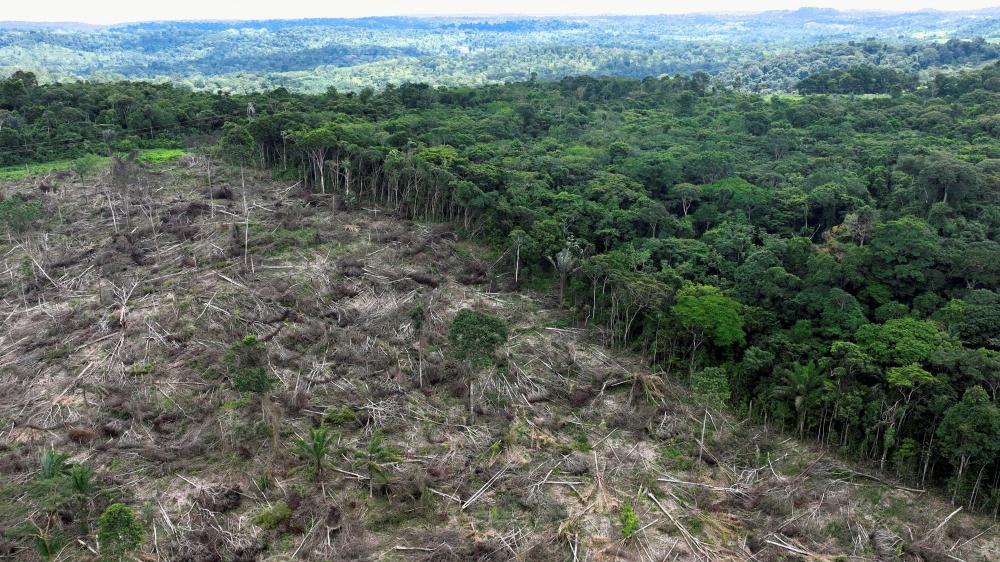
In particular, the razing of tropical rainforests in the Amazon, Congo Basin, Southeast Asia and beyond is pushing the planet toward irreversible tipping points. Once lush rainforests are being clear cut or burned to create land for cattle, soy, palm oil, and other commodities. Not only does this directly annihilate biodiversity, it also releases massive carbon emissions, alters rainfall, and edges these forests closer to ecosystem collapse. The UK security report flagged these regions as “particularly significant” for British and global security, yet deforestation continues virtually unabated.
We in the developed world are far from innocent bystanders. The global economy’s demand for resources links consumers and financiers to faraway extinctions. For example, since the UK passed an Environment Act in 2021 promising to curb imported deforestation, British imports of beef, palm oil, soy and other forest risk commodities have still been linked to the clearing of over 39,000 hectares of tropical forest an area larger than the entire New Forest in England. Meanwhile, British banks and investors have funneled more than $1.2 billion into companies driving forest destruction since the Paris Climate Agreement. These statistics underscore a troubling reality: our current policies and consumption patterns are actively fueling the biodiversity crisis, even as our governments now acknowledge it as a security threat.
Yet political action remains sluggish and halting. The UK’s Environment Act includes a provision to ban products from illegally deforested land, but years later this measure still hasn’t come into force. Economic pressures and industry lobbying often take priority over enforcement of environmental protections. Globally, pledges to end deforestation or protect 30% of lands and oceans often lack teeth or funding. This implementation gap means that even as warnings grow louder, the destructive status quo carries on, inching us closer to planetary tipping points.
Safeguarding Security by Saving Nature
If there is a silver lining to this stark assessment, it is the clarity of the mandate it provides. We now know that protecting nature is not a luxury it is an imperative for national and global security. This realization must galvanize a profound shift in priorities for governments, businesses, and societies. Preserving ecosystems and biodiversity needs to move to the center of policy agendas, alongside traditional security and economic concerns. In practice, this means dramatically scaling up conservation efforts, enforcing environmental laws, and reorienting financial flows away from destruction and toward restoration. It’s estimated that about $700 billion per year will be required by 2030 to adequately protect and restore nature worldwide a substantial investment, but one that pales beside the cost of global conflict and disaster that unchecked ecological collapse would bring.
Firstly, world leaders should integrate biodiversity loss into their national security and defense strategies. Just as we plan for military or cyber threats, we must plan for ecological threats funding early warning systems for ecosystem changes, stress testing food and water systems, and scenario planning for resource shocks. Investing in nature protection and climate mitigation is investing in peace and stability. Countries that safeguard critical ecosystems and support sustainable agriculture will be far better placed to withstand the coming storms than those that ignore the warning signs.
Secondly, urgent action is needed to address the root causes of biodiversity collapse. This includes combating deforestation through stronger supply chain regulations and support for forest communities. The NGO Forest Coalition a partnership of leading environmental organizations has called on the UK to fully implement its anti deforestation law and extend it to all deforestation, not just the illegal variety. They and other advocates insist that we must end the import of commodities grown at the expense of the world’s remaining forests, and likewise halt the financing of ecocide. Public support for such measures is high: polls indicate roughly three quarters of citizens support ending deforestation linked imports by 2030, recognizing that our consumption should not come at the cost of planetary security.
Crucially, protecting nature also means empowering the Indigenous peoples and local communities who are the frontline guardians of so many biodiverse regions. These communities have long safeguarded forests and watersheds; supporting their land rights and conservation efforts is one of the most effective ways to keep ecosystems intact. Likewise, the world must dramatically expand protected areas and ensure these are not just lines on a map but are backed by enforcement and sustainable management.
Time is not on our side. The coming decade is make or break for bending the curve of biodiversity loss before catastrophic tipping points are crossed. As one environmental security expert put it, by failing to act decisively now, governments are “endangering national security and driving up future costs of living” the destruction of the world’s ecosystems is already “reshaping geopolitics, threatening food supplies and destabilising societies”. Conversely, swift action to conserve nature can still mitigate the worst outcomes. There is still hope: advances in sustainable farming, reforestation, and even high tech solutions like lab grown proteins could reduce pressure on wild systems if adopted at scale. International cooperation through agreements to fund biodiversity protection and share the burden will be essential, because collapse anywhere will have reverberations everywhere. No nation can insulate itself from the impacts of biodiversity collapse beyond its borders if one critical ecosystem falls, the shockwaves will ultimately reach us all.
The tipping point we face is both a crisis and an opportunity. It is a crisis because we stand to lose so much of the natural world that sustains us. But it is also an opportunity to fundamentally realign our relationship with nature before it’s too late to recognize that in safeguarding wildlife and ecosystems, we are really safeguarding ourselves. The warnings have been issued by scientists, generals, and community leaders alike. We must act on those warnings now, with the urgency of a society protecting its very foundation. Our security, in the most profound sense, depends on it. The choice we face is stark: protect the web of life that protects us, or watch our stability unravel along with it.