The Economic Weapon How China’s $1 Trillion Trade Surplus Reshapes Global Power
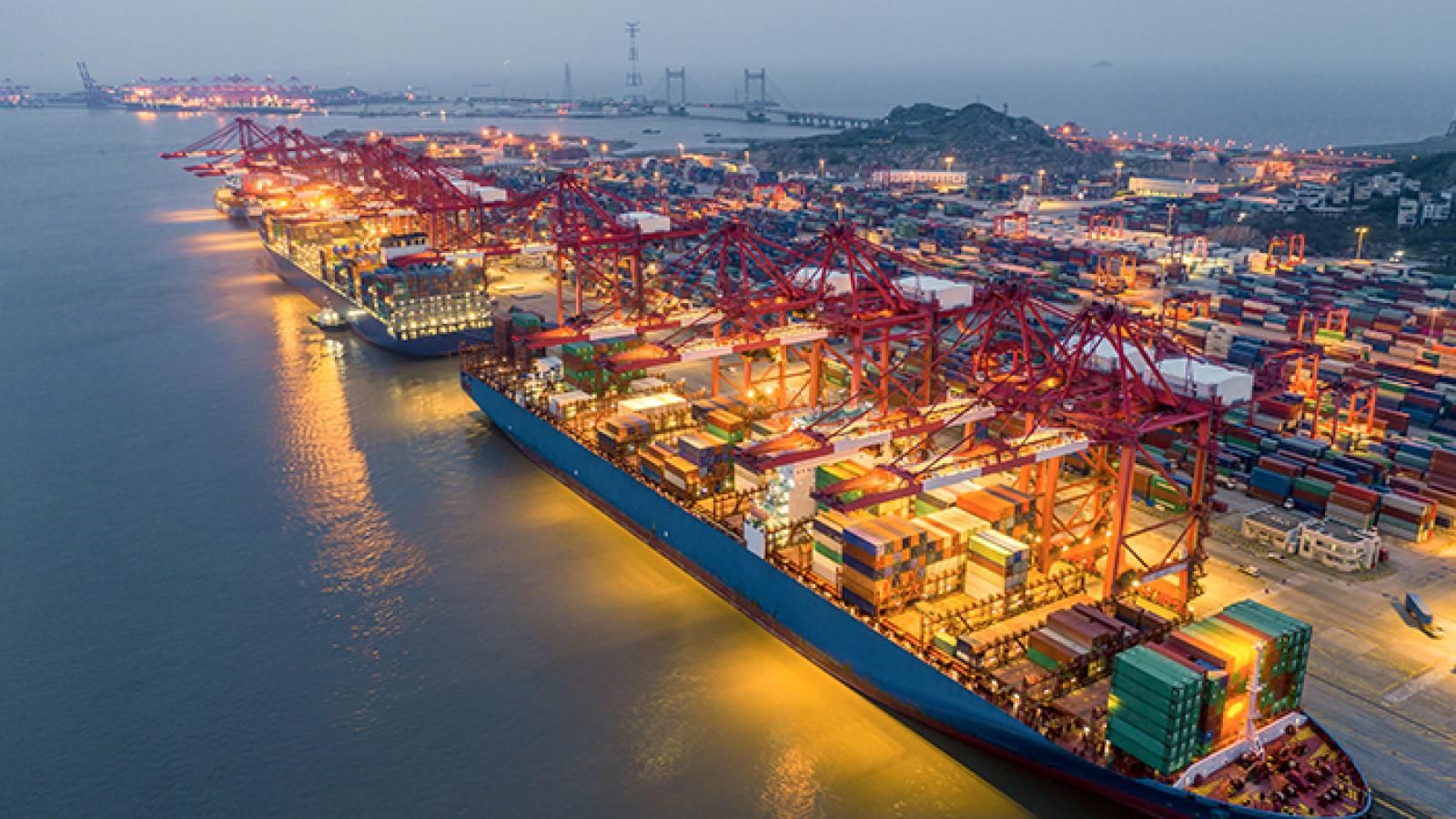
A photo that could have been taken in any year of the last two decades now carries a different meaning: cranes swinging above stacks of containers, the steady pulse of trucks and rail lines feeding a port that never seems to sleep, and a vessel waiting with an open belly for the next wave of exports. In December 2025, China reached a milestone that turns that everyday image into a symbol of strategic weight. Its annual trade surplus surpassed $1 trillion for the first time. Put plainly, China sold roughly one trillion dollars more to the world than it bought back.
The number did not arrive with fireworks. It arrived the way economic power usually arrives in the modern era: through accumulation and persistence. Each month’s gap between exports and imports stacked on the last. Each redirected shipment became proof that the machine had alternative routes. And because trade balances sit at the intersection of production, finance, and politics, the milestone is more than an economic headline. At this scale, a trade surplus becomes a lever. It influences the choices other governments can afford to make, the industrial strategies they adopt, and the alliances they prioritize when markets and security concerns collide.
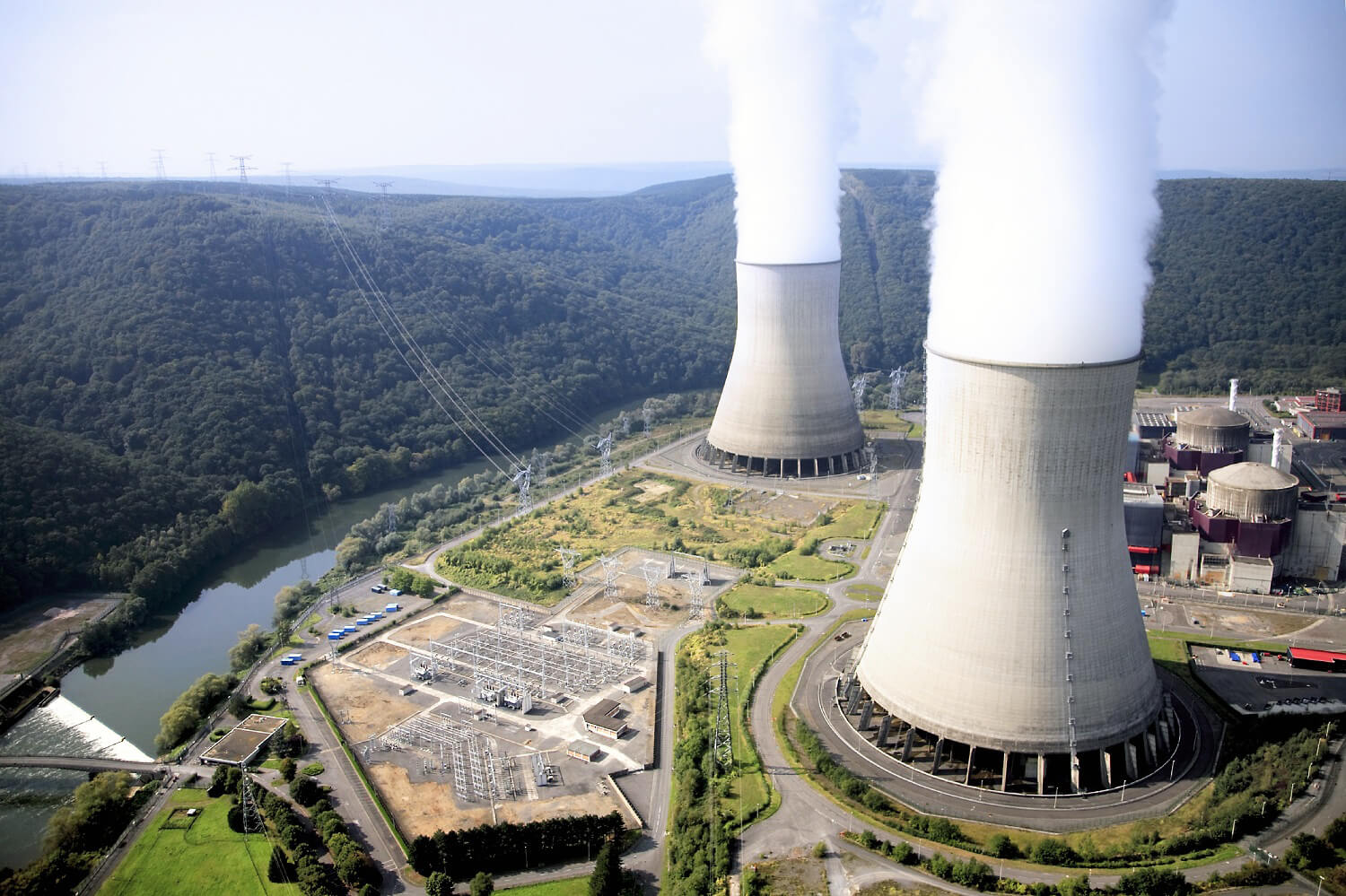
China’s position behind the number is what makes it hard to dismiss. By 2025, China produced roughly 31% of global manufacturing output while representing about 18% of global GDP. That combination is historically unusual. It means China’s industrial footprint is larger than its share of world income would predict in a balanced global economy, and it helps explain why global markets can feel as if they orbit around Chinese capacity. It also means that many countries, from rich to poor, have built daily economic life around access to Chinese made goods whether they admit it or not.
The $1 trillion threshold was reached in the shadow of a trade war that was supposed to prevent outcomes like this. Since 2018, tariffs and related policy tools have been used by Washington to contain China’s rise, protect domestic industry, and reduce dependence. Yet the story of 2025 is that the more the United States tried to narrow China’s access to American demand, the more China refined its ability to sell elsewhere. Exports to the United States fell sharply, but overall exports did not. They re routed. And when the world still buys, the surplus still grows.
The Trillion Dollar Surplus in an Era of Trade Wars
A trillion dollar surplus is not just a sign of export strength; it is also a sign of imbalance. Exports rise, imports lag, and the difference accumulates. In 2025, China’s export resilience stood out precisely because global conditions were not simple. Trade barriers were higher, geopolitical risks were thicker, and many economies were still dealing with the aftereffects of inflation and elevated interest rates. Under those conditions, a record surplus suggests not only competitiveness but structural advantage: a capacity to keep shipping goods even when the biggest market in the world is actively trying to price you out.
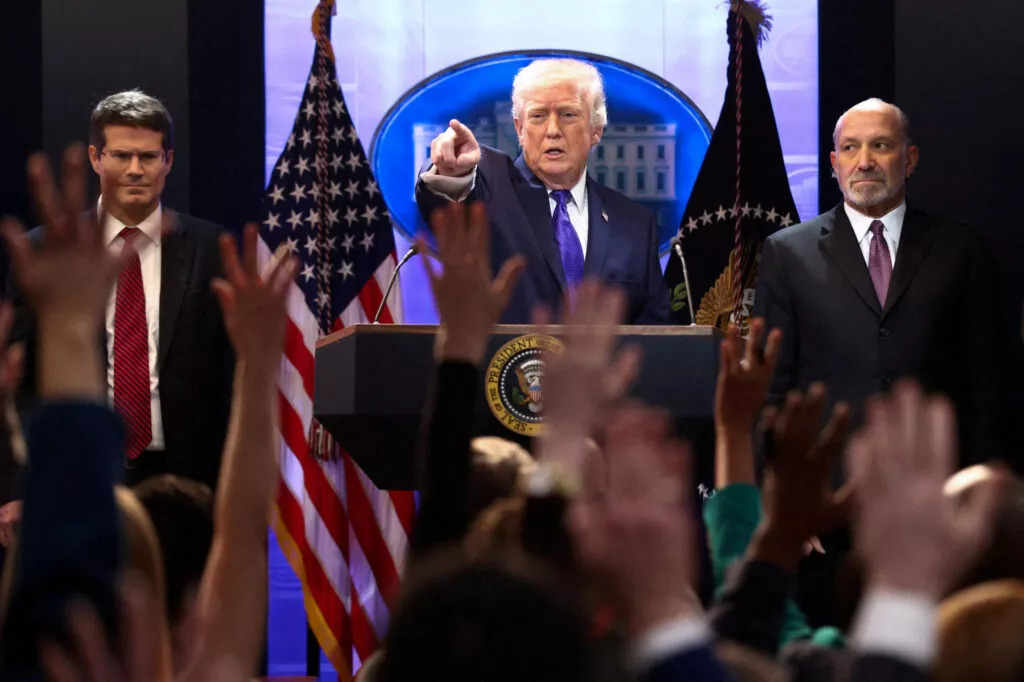
The U.S. tariff campaign became the stress test. It began under President Trump in 2018, escalated through multiple rounds, and transformed the cost structure of the U.S. China relationship. Before the trade war, tariffs were generally too low to meaningfully change sourcing decisions for most consumer and intermediate goods. After 2018, tariffs became a permanent feature of planning. Importers began to treat tariff risk the way they treat currency risk: something to hedge, work around, and ultimately price into long term decisions.
By 2025, the tariff story turned even more volatile. The Trump administration returned to office and revived a more confrontational approach. During the spring, import taxes on Chinese goods spiked to extreme levels, at one point reaching a punitive 145% rate that pushed segments of U.S. China goods trade toward a virtual standstill. Later, after legal challenges, political pressure, and renewed negotiations, tariff levels were reduced and stabilized at a still high average rate commonly described as around 47.5%. That remains far above the pre 2018 environment and high enough to force companies into costly decisions: either absorb the margin hit, re route production, or find different markets.
China’s re routing in 2025 can be seen in the direction of trade flows. During a key late year month, exports to the United States reportedly fell by roughly 29% year on year, while exports to the European Union rose about 14.8%, to Australia about 35.8%, and to Southeast Asia about 8.2%. At the same time, imports rose only modestly about 1.9% in that same period reflecting softer domestic demand. The result was a monthly surplus of roughly $111.68 billion and a cumulative surplus for the first eleven months of approximately $1.08 trillion, placing the country beyond the symbolic trillion dollar threshold before the year even closed.
These figures matter because they highlight a structural truth: tariffs can divert trade more easily than they can rebuild industrial ecosystems. When the U.S. market became less accessible, Chinese firms did not simply stop producing; they sought other buyers. They leaned into demand in regions where price sensitivity is high and alternatives are limited. They expanded sales to places already integrated into China led supply chains. And they used the very uncertainty created by tariffs to accelerate diversification away from the United States as a destination.
Trade re routing also has a psychological effect. It signals to policymakers that tariffs may change who buys what, but they may not change who makes what. In Beijing, the trillion dollar surplus can be framed as proof that pressure failed and industrial strategy delivered resilience. In Washington, it can be framed as evidence that tariffs were too narrow or that enforcement was insufficient, implying the need for deeper measures. In Europe and many emerging markets, the surplus is both a relief and a warning: a relief because it brings low cost goods that help manage inflation and support consumption, and a warning because it can overwhelm local producers and trigger political backlash.
The reality is that China’s surplus sits at the intersection of domestic weakness and external strength. When domestic demand cools, imports soften. When production capacity remains high, exports become the release valve. In 2025, that pattern was amplified by cautious household spending, lingering property sector stress, and an industrial system that still relies on scale to maintain output and stability. The surplus is therefore not only an outcome. It is also a stabilizer for China’s domestic economy, buying time and cushioning internal pressures by leaning on foreign demand.
Made in China: Manufacturing Might and Global Imbalances
To understand why China can generate a surplus of this scale, you have to look beyond month to month trade data and toward the machinery of production. China’s manufacturing system is not just large; it is dense. It includes clusters of suppliers, specialized labor pools, logistics networks, financing channels, and policy frameworks that support both expansion and adaptation. In earlier decades, foreign firms moved production to China for lower labor costs. Over time, the reason shifted. Companies stayed because China became a place where you could scale quickly, source components within tight radiuses, rely on reliable logistics, and find the industrial “ecosystem” that makes manufacturing efficient.
China’s 31% share of global manufacturing output is the clearest shorthand for this dominance. But the more telling comparison is between manufacturing output and national income. At roughly 18% of global GDP, China’s manufacturing share is far larger than its share of global income would predict in a balanced world. That mismatch suggests a development model that produces more than it consumes. It is a model shaped by high domestic savings, investment heavy growth, and a policy preference for industrial capacity. When an economy invests heavily in factories and supply chains, it tends to generate output faster than household consumption can absorb especially if wages and consumption growth lag productivity.
This is why trade surpluses are often the mirror of domestic demand shortfalls. When households consume a smaller share of national output, and when investment is directed toward production capacity, an economy must export the difference. In China’s case, the system has historically relied on a combination of investment, exports, and managed financial channels that keep the industrial machine moving even when household demand softens.
Currency policy is part of the story, though it is rarely as simple as a single accusation. China’s exchange rate system is managed rather than fully floating. Over the years, Beijing has used a combination of daily trading bands, capital controls, and state bank behavior to prevent sharp currency moves that could destabilize growth or financial stability. Critics argue that this management can keep the renminbi weaker than it might be under a free float, supporting export competitiveness and slowing the adjustment that would naturally narrow a surplus. Defenders argue that stability is a legitimate goal, especially for an economy of China’s size, and that the currency does move both directions over time. ly.
What matters in practical terms is how adjustment pressure is distributed. In textbook models, persistent surpluses should result in currency appreciation, making exports more expensive and imports cheaper, which narrows the gap. In reality, structural factors can slow or redirect that adjustment. Capital controls limit outflows, savings remain high, and state directed credit can keep investment elevated even when returns fall. The surplus persists longer, and the costs show up elsewhere in global trade tensions, in defensive policies by trading partners, and in political narratives that link economic imbalance to national vulnerability.
Manufacturing employment adds another layer of tension because manufacturing jobs remain politically symbolic. In the United States, manufacturing employment has been on a long downward trend for decades, shaped by automation and the shift toward services. The reshoring narrative suggests a comeback, but the data indicate a slow and modest revival at best. At the end of 2024, U.S. manufacturing employed about 12.6 million people, representing roughly 9.3% of private sector employment, far below the levels of past decades. Even when new factories are announced, modern production tends to be capital intensive. It creates jobs, but rarely at the scale implied by nostalgic political rhetoric.
In China, manufacturing employment is changing too, but for different reasons. Automation, robotics, and industrial upgrading have reduced the labor required per unit of output. This allows China to expand production while limiting wage pressures, and it makes export dominance less dependent on low wages than it once was. China can compete in increasingly sophisticated sectors electronics, machinery, vehicles, shipbuilding, and green technology because it has scaled capability, not just cheap labor. That matters because it makes the “China challenge” more durable: it is not simply about cost competition; it is about industrial system competition.
For the rest of the world, the imbalance poses a strategic choice. Many countries want access to Chinese goods and capital. They recognize that China’s industrial scale can accelerate infrastructure buildout and expand consumer access to affordable products. But they also fear dependency and deindustrialization. If China’s surplus reflects overcapacity in certain sectors, exports can become a way to push that overcapacity abroad. That keeps Chinese factories running, but it can crowd out local producers and intensify political backlash. Trade policy then becomes not only economic defense, but also a tool to preserve social stability.
This is the deeper reason the surplus matters. It is not simply money on a ledger. It is a reflection of where production capacity sits, how profits and wages are distributed, and how states manage the relationship between domestic stability and external demand. A trillion dollar surplus signals that China’s production machine still outruns its domestic absorption, and that the rest of the world is still large enough and still dependent enough to absorb what China produces.
From Surplus to Strategy: How Trade Becomes Geopolitics
The surplus begins to look like an “economic weapon” when you consider what it enables. A country running a trillion dollar surplus accumulates financial room. That room can be used to stabilize its currency, finance overseas projects, secure commodity supplies, and build relationships with countries that need investment. It can also be used to endure pain. If tariffs raise costs or reduce sales in one market, a large surplus provides cushion to support exporters, maintain employment, and buy time for firms to find alternative routes.
Trade becomes strategically relevant when it intersects with choke points. China is a major supplier of critical minerals and processing capacity, and it sits upstream in many industrial chains that are difficult to replace quickly. Rare earths are the famous example, but the broader reality includes battery supply chains, solar components, and intermediate goods that appear mundane until they become scarce. In moments of political tension, the ability to slow or restrict exports of key inputs becomes leverage. Even without openly “weaponizing” trade, the mere possibility forces others to plan for risk, diversify suppliers, and invest in redundancy.
The U.S. China tariff conflict illustrated another form of leverage: unpredictability. When tariffs rose and fell rapidly, businesses had to make decisions under uncertainty. Importers rushed to front load shipments during any temporary reduction windows. Producers in third countries were pulled into the contest as alternative suppliers. Investors priced political risk into supply chains. The trade war became a global tax on predictability. China’s surplus demonstrated that Beijing could endure that tax because its manufacturing system and global market reach gave it options.
Europe’s response highlights how the surplus forces policy recalibration. European economies want to meet climate targets and keep consumer prices stable, both of which are helped by affordable imports. At the same time, Europe worries about losing strategic industries to Chinese competition, particularly in clean technologies that will define future growth. As Chinese exports rose into Europe during periods of U.S. restriction, the political debate intensified. Defensive measures anti dumping, subsidy investigations, local content strategies, and industrial funding became more plausible even for governments that traditionally favored open trade. The surplus, in other words, can provoke a protective response not because it is inherently hostile, but because it changes the domestic political arithmetic of industrial survival.
Emerging markets face an even harder set of choices. Many welcome Chinese goods because they improve living standards, expand consumer access, and support infrastructure. But they also fear becoming locked into a role as commodity suppliers and consumer markets for Chinese manufacturers rather than building their own industrial bases. If Chinese goods arrive at prices local producers cannot match, industrialization becomes harder. Development strategies then collide with geopolitical realities, and trade becomes a battlefield for the future shape of national economies.
India’s currency stress in 2025 offers a window into how these pressures can surface. In late 2025, the Indian rupee fell to around 90.21 per U.S. dollar, a record low. Analysts pointed to a mixture of forces: persistent portfolio outflows, higher hedging demand by importers, concerns over market access, and pressure linked to tariffs on exports and weaker external flows. When global capital becomes cautious and trade flows weaken, emerging market currencies often become shock absorbers. A weaker currency can help exporters over time, but it also raises the cost of imports and can amplify domestic inflation pressures. In that context, a giant surplus economy indirectly influences financial stability elsewhere not by decree, but by changing the competitive and capital flow landscape.
For the United States, the longer term challenge is that tariffs alone cannot rebuild an industrial ecosystem. Tariffs can raise the cost of imported goods and create incentives for domestic investment, but they do not automatically generate skilled labor, supplier networks, and stable demand. Manufacturing is an ecosystem business. China’s advantage lies in the ecosystem it already has: dense suppliers, mature logistics, and the ability to scale quickly. That is why U.S. policy has increasingly combined tariffs with industrial subsidies, infrastructure spending, and targeted restrictions on technology. The shift suggests a recognition that rebuilding industrial capacity requires more than raising the price of imports; it requires rebuilding the underlying conditions that make production competitive.
China faces its own strategic test. A surplus of this scale is a sign of strength, but it is also a sign of dependency on external demand. If the world turns more protectionist, China’s model becomes more vulnerable. That is why Chinese leaders speak of boosting domestic consumption and reducing reliance on exports, and why international institutions have urged China to rebalance toward household demand. The logic is straightforward: higher domestic consumption would raise imports, reduce the surplus, and ease global friction. But shifting consumption is politically and structurally hard. It can require stronger safety nets, reallocation of income toward households, and reforms that reduce the incentives for high savings. Those are not quick changes. Until they occur at scale, exports will remain a stabilizer, and the surplus will remain a persistent feature.
The question, then, is whether the trillion dollar surplus is a peak or a platform. If it is a peak, it could be followed by gradual rebalancing toward consumption, a smaller surplus, and a less confrontational global trade environment. If it is a platform, it could finance deeper outward expansion, stronger industrial dominance, and intensified geopolitical competition. Either way, the surplus changes the balance of power. It gives China options. It forces others to respond. And it turns trade, once treated as an almost purely economic domain, into a central arena of statecraft.
Conclusion: A Weapon Without a Trigger
The most important feature of China’s $1 trillion trade surplus is not simply that it is large, but that it is structural. It reflects a world in which production capacity is highly concentrated, supply chains are deeply interconnected, and policy tools like tariffs can redirect trade without quickly changing underlying dependence. The surplus shows that China remains the indispensable industrial platform for many goods even under sustained pressure from the world’s largest consumer market. It also shows that the global economy can adjust around barriers in ways that preserve China’s role sometimes by diverting trade, sometimes by shifting assembly, but often by maintaining Chinese value inside supply chains even when the final label changes.
In practical terms, the surplus supports China’s ability to invest abroad, endure economic shocks, and expand influence through finance and trade. It also heightens anxiety among trading partners who fear deindustrialization, dependency, and vulnerability to supply disruptions. That anxiety will continue to shape policy, from European trade defenses to U.S. industrial strategy to emerging market efforts to build local capacity. The world is moving toward a more strategic form of globalization, one in which redundancy is valued, national security is woven into procurement decisions, and the politics of supply chains becomes a central feature of economic governance.
China’s surplus is therefore an economic weapon in a specific sense. It does not need to be “fired” to change behavior. Like any source of structural power, it works through anticipation. Governments anticipate dependence and diversify. Companies anticipate tariffs and reroute supply chains. Investors anticipate political shocks and price risk. Even when China does nothing explicitly coercive, the surplus shapes the environment in which others act, and that shaping is itself a form of influence.
The next few years will determine whether this weapon becomes less sharp through rebalancing or more decisive through fragmentation. If China manages to boost domestic consumption meaningfully, imports will rise and the surplus will narrow, easing pressure on global industry. If politics pushes the world toward blocs, the surplus could become a wedge that accelerates competing industrial systems and higher costs for everyone. Either outcome will define how power is measured in the coming decade. For now, the lesson of 2025 is clear: in the twenty first century, global power is measured not only in armies and alliances, but in factories, shipping lanes, and the quiet arithmetic of who produces more than they consume.