
Energy Security in Europe: Diversifying Away from Russian Supplies
In 2021, Russian gas accounted for about 40% of the European Union's total gas supply, a dependency that exposed the bloc to severe vulnerabilities when supplies were curtailed amid geopolitical tensions. By mid-2025, this figure had plummeted to around 10-12% of total gas imports, reflecting a rapid pivot to alternative sources like Norway and the United States, alongside accelerated renewable energy deployment. This transformation, driven by the EU's REPowerEU plan launched in 2022, underscores a pivotal shift in Europe's energy landscape, balancing immediate security needs with long-term decarbonization goals.
The Roots of Dependency
Europe's reliance on Russian energy built over decades, with pipeline gas dominating imports due to proximity and long-term contracts. Pre-2022, Russia supplied nearly half of EU gas needs via routes like Nord Stream, Yamal through Poland, Ukraine, and TurkStream via Turkey. This infrastructure locked in economic ties, but weaponization of supplies during the Ukraine conflict revealed risks: prices spiked over 10-fold in 2022, fueling inflation and industrial shutdowns.
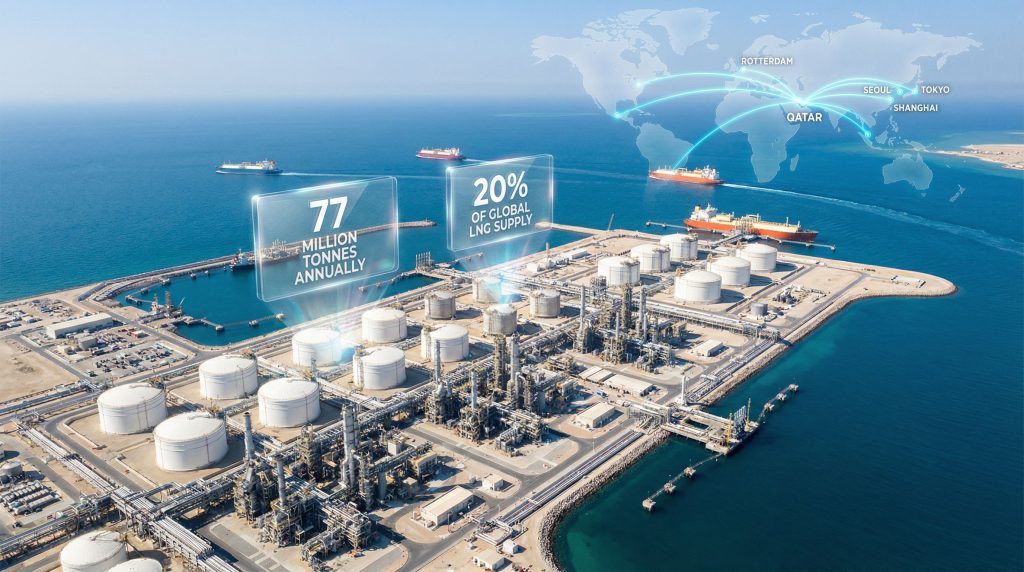
Diversification efforts predated the crisis, yet progress was slow. Norway emerged as a steady partner, providing 30% of EU gas and LNG in Q1 2025, up from earlier shares, thanks to its stable North Sea fields. The US filled critical gaps, capturing 25-50% of LNG imports by value in early 2025, with volumes rising to offset Russian shortfalls of 98.5 billion cubic meters (bcm) since 2021. Algeria and Qatar contributed 12-13%, though their shares fluctuated with global demand.
Progress in Diversification
The EU's response was multifaceted. LNG imports surged, with regasification capacity utilization hitting record levels in 2022-2023 before stabilizing. By H1 2025, combined pipeline and LNG imports showed Norway at 29%, US at 27%, Russia at 13%, and Algeria at 12% a stark contrast to 2021's Russian dominance. Bruegel data for October 2025 highlights US LNG exceeding 60% of total LNG arrivals, while Norwegian pipeline flows reached seasonal highs.
Pipeline shifts bolstered resilience. Norway delivered 91.1 bcm in 2024, a 15% increase from 2021, representing 33.4% of imports. Reverse flows to Ukraine from EU storage hit records, aiding regional stability at 83% EU storage fill rates, though below 2022-2024 peaks. Spot market reforms and new terminals in Germany, Poland, and Greece expanded flexibility, reducing transit risks through Ukraine or Belarus.
Renewables played a starring role. Wind and solar capacity grew 58% cumulatively from 2021-2024, displacing 38 bcm of gas; 2025 projections add 16 bcm savings. Electricity from renewables hit 47% EU-wide, nearing the 42.5-45% 2030 target under the revised Renewable Energy Directive. Energy efficiency measures, including demand reduction, cut overall gas needs, with Q1 2025 imports down due to milder weather and conservation.
Persistent Challenges and Vulnerabilities
Despite gains, hurdles remain. Russian LNG hit record European levels in early 2025, surpassing Qatar as the second-largest supplier after the US, even as pipeline gas waned post-Ukraine transit halt. Seven EU states France (up 40% to €2.2bn), Netherlands (72% to €498m), plus Belgium, Croatia, Romania, Portugal, Hungary increased Russian energy buys in 2025's first eight months, totaling over €11bn bloc-wide. Hungary and Slovakia alone accounted for €5bn, citing long-term contracts and landlocked status.
Infrastructure gaps exacerbate divides. Landlocked nations like Hungary push for Russian pipeline exemptions, rejected by Parliament in November 2025. Cyberattacks and sabotage threaten grids, subsea cables, and offshore wind, prompting calls for mandatory cybersecurity on devices and EUwide cooperation. Storage levels, while high, lag prior years, and shadow fleet oil evasions complicate full decoupling.
Economic strains persist. While prices stabilized, rebounding Russian imports in 2024 raised €11bn in 2025 payments, funding Moscow despite 90% reliance cuts since 2022. Global LNG competition from Asia's demand to US export limits poses risks, as does Norway's maturing fields.
Policy Frameworks and Timelines
REPowerEU slashed Russian gas from 45% to 19% by 2025, but a May 2025 roadmap targets full phase-out by 2027: no new contracts or spot buys post-2025, national plans by year-end. Gas traceability, oil shadow fleet curbs, and nuclear fuel restrictions form the pillars, aligning with Green Deal ambitions.
Parliament's July 2025 resolution urges infrastructure protection, diversified storage, and clean tech acceleration. Bans on Russian LNG transshipment via EU ports started March 2025, with Nord Stream sanctions proposed June 2025. Member states must balance solidarity, with proposals for legislative ends to short-term deals by 2025 and long-term by 2027.
The Renewables Imperative
Long-term security hinges on domestics. Renewables target 42.5% by 2030, doubling current shares via simplified permitting and investments. Euro area data shows diversified mixes with high local production yield top security scores; 25% renewables in 2022 consumption signals incomplete transition. Efficiency and demand-side flexibility further insulate against shocks.
Wind/solar growth saved € costs long-term, fostering resilience sans geopolitical ties. Yet deployment lags in some states, demanding policy harmonization.
Emerging Dependencies and Risks
While diversification has reduced Russian leverage, it has introduced new dependencies that test Europe's strategic autonomy. The United States now supplies over 45% of EU LNG imports by volume in late 2025, up from negligible shares pre-2022, creating exposure to transatlantic trade dynamics and potential US export policy shifts under varying administrations.
China dominates critical mineral processing 60% of cobalt, 70% of rare earths essential for wind turbines, solar panels, and batteries, raising supply chain vulnerabilities amid EU efforts to onshore production. Infrastructure lags compound this: cross-border interconnectors remain underdeveloped, with only 15% of offshore wind connected to grids by mid-2025, hindering renewable integration and exposing regions to weather-driven volatility.
Cyber threats have surged, targeting grids and subsea cables, as seen in 2024 Baltic incidents, prompting EU mandates for inverter cybersecurity standards. Regional disparities persist Nordic states lead with 70% renewable electricity, while Eastern Europe clings to lignite, losing over 1 million industrial jobs since 2021 due to sustained high costs. These shifts demand balanced risk assessment: LNG bridges the gap but delays full decarbonization, while mineral reliance mirrors past fossil dependencies without diversified sourcing.
Strategic Pathways Forward
To fortify resilience, the EU advances multi-pronged policies blending short-term buffers with structural reforms. REPowerEU's 2025 roadmap enforces no new Russian contracts post-2025 and full phase-out by 2027, backed by €300 billion in green investments via the Innovation Fund and Green Deal Industrial Plan. The Carbon Border Adjustment Mechanism (CBAM), fully operational by 2026, shields industries from imports undercutting EU climate standards, potentially generating €14 billion annually for reinvestment. Hydrogen backbones and nuclear expansions—France targeting 50% low-carbon power complement renewables, with electrolyzer capacity tripling to 10 GW by 2025.
Demand-side management and smart grids aim to cut peak loads by 20%, per EASAC recommendations, while circular economy practices recycle 25% more critical materials domestically. Member states must harmonize: landlocked nations receive LNG access via reverse flows, but Parliament rejects permanent exemptions. Analytical lens reveals viability—storage at 85% fill and diversified pipelines mitigate winters—but success hinges on unity, as fragmented execution risks renewed vulnerabilities. This evolution positions energy security not as mere supply hedging, but integrated climate resilience.
Country Contrasts
Diversification varies widely:
| Country/Group | Russian Share 2021 | 2025 Trends | Key Alternatives |
|---|---|---|---|
| Norway-led North | Low | Stable supplier (30% EU gas) | Domestic fields |
| Germany/Italy | 55% gas | LNG ramp-up; renewables 47% power | US/Norway |
| Hungary/Slovakia | High pipeline | €5bn 2025 buys; seeking exemptions | Limited LNG access |
| France/Netherlands | Moderate | +40-72% value; transit hubs | Russian LNG records |
| Baltics/Poland | Pipeline-heavy | Full pivot; new terminals | Norway/US/Algeria |
This table highlights intra-EU divides, with LNG-equipped states faring better.
Future Outlook
By 2027, zero Russian fossil fuels could reshape security, but execution demands unity. Global LNG growth aids, yet methane leaks and climate goals temper enthusiasm. Decarbonized systems promise lower costs and crisis-proofing, per ESM analysis.
Analytical view: Progress is factual imports diversified, renewables surging but incomplete. Seven states' upticks signal contract rigidities and infrastructure needs. Neutral assessment: Full independence viable via policy, yet vulnerabilities like cyberattacks persist. Data-driven resilience building continues.
References
5 - https://kyivindependent.com/seven-eu-states-increase-russian-energy-imports-in-2025-reuters-reports/
6 - https://www.esm.europa.eu/blog/renewable-energy-can-fuel-increased-energy-security
7 - https://www.bruegel.org/dataset/european-natural-gas-imports
8 - https://ieefa.org/european-lng-tracker
9 - https://www.bruegel.org/analysis/future-european-union-gas-imports-balancing-different-objectives
10 - https://www.voronoiapp.com/energy/EU-Exchanges-Russian-Gas-for-American--Norwegian-Supplies-6390
13 - https://ieefa.org/articles/eu-combined-gas-and-lng-imports-fall-due-reduced-demand
14 - https://commission.europa.eu/topics/energy/repowereu_en