Sudan's Silent Genocide The World's Worst Humanitarian Crisis You're Not Hearing About
Sudan’s war does not announce itself the way wars often do in the global imagination. There are no nightly prime time maps with bright arrows and familiar place names, no steady drumbeat of headlines that keeps the frontlines “known.” Instead, the conflict reaches the outside world in fragments: a photograph of a burned neighborhood, a quote about famine risk, a short dispatch about another town changing hands. The pieces arrive, and then the world’s attention slides elsewhere. That drift is not neutral. When attention fades, pressure fades. When pressure fades, the incentives that restrain violence weaken. In Sudan, that absence has become part of the catastrophe.
Inside Sudan, there is no such distance. The war is present in the most ordinary decisions. Do you send your child to school when the road might be controlled by armed men? Do you keep your grandmother’s medicine for today, or sell it to buy food for the week? Do you sleep in the same place two nights in a row, or move before dawn because your neighborhood has become a battleground? Since April 2023 when a power struggle between Sudan’s regular armed forces, the Sudanese Armed Forces (SAF), and the paramilitary Rapid Support Forces (RSF), turned into open conflict daily life has been forced into this arithmetic of risk. Nearly two years on, the war has shattered a nation of roughly 50 million. Estimates of the death toll vary widely, but credible assessments suggest the number could be well into six figures. Displacement is beyond dispute: more than 12 million people have been driven from their homes, and millions have crossed borders in search of safety. Two thirds of the population now needs some form of humanitarian aid to survive. The country has become the world’s largest displacement crisis at the same moment it is spiraling toward famine.
This is why the phrase “silent genocide” matters. It is not a slogan meant to flatten a complex war into a single label. It captures a pattern that should alarm anyone who cares about international norms: credible documentation of atrocity crimes, mass hunger, and social collapse combined with an international response that is late, underfunded, and politically cautious. The silence is not a lack of evidence. It is a lack of sustained urgency. Sudan is not suffering from invisibility; it is suffering from a global hierarchy of attention.
The war is not only about two armed factions. It is about what happens when state power fractures and violence becomes a tool for reordering society. It is about the long shadow of Darfur, where targeted ethnic violence is again documented at scale. It is about starvation used as strategy, displacement used as weapon, and the collapse of hospitals and water systems used as leverage. It is also about the world’s selective empathy: how some crises trigger immediate mobilization while others are treated as distant tragedies that can be managed, not ended.
The Frontlines: How a Power Struggle Became a National DisintegrationWhen fighting began in Khartoum in April 2023, many Sudanese feared a short, brutal contest for the capital. Few imagined a war that would spread outward, fracture the country, and make survival itself a daily calculation. The conflict expanded because both sides were built for internal power rather than national defense. The SAF carried the symbols of statehood: an air force, formal command structures, and control over key institutions. The RSF carried different strengths: mobility, decentralized networks that can move men and supplies quickly, and deep experience in irregular warfare. In a state where institutions were already fragile, these attributes made the war hard to contain.
By late 2025, Sudan’s map resembles a broken mosaic. Many assessments describe the SAF as holding much of the north, east, and central corridor, while the RSF remains deeply entrenched in the west especially Darfur and in parts of the south. Some analyses estimate a rough division of territorial control in which the SAF holds a majority share and the RSF and aligned forces hold a very large minority share. These percentages shift and are often disputed, but they point to a durable reality: neither side has the capacity to win quickly, and both sides have enough capacity to continue hurting civilians.
Stalemate has pushed the war into new theaters. Kordofan, a central region that connects the Nile heartland to Darfur and the west, has become a strategic hinge. Whoever controls Kordofan influences rail lines, fuel routes, and access to agricultural zones. It is also a region where civilians are exposed: towns sit along corridors that armed men can choke like valves, allowing or denying movement, trade, and aid. When Kordofan burns, Sudan’s internal arteries close.
In early December 2025, a single place name captured the war’s dynamics: Babanusa. The town sits on a key transport corridor in West Kordofan. During what was nominally a period of declared humanitarian truce, the RSF launched a major assault on the Sudanese army’s 22nd Infantry Division headquarters there. After several days of heavy fighting, RSF forces announced they had seized the division’s base and declared control of the city. Sudan Tribune reported that doctors and local sources described families effectively held in the city and unable to flee safely. Babanusa had already been emptied in phases by earlier offensives; what remained was a community trapped between hunger and violence.
Babanusa is not merely a battlefield; it is a portrait of what war does to ordinary life. Towns like it are emptied long before they “fall.” Families leave in stages first those with money to pay for transport, then those who can borrow, then those who stay because they have nowhere else to go. When armed groups arrive, they inherit a city already drained of its economy. Shops have no supply chains, clinics have no medicines, schools have no teachers. Even after a battle ends, the emptiness remains. And in that emptiness, armed men become the only functioning authority.
The war’s boundaries have expanded in another sense: even international installations have become vulnerable. In December 2025, a drone strike hit a United Nations logistics base in Kadugli, killing and wounding peacekeepers. The incident matters not only because it was deadly, but because it shows how normalized the war has become how even facilities meant to be protected by the idea of neutrality can be pulled into violence. Each such attack also chills humanitarian logistics. When aid workers believe neutrality no longer protects them, the movement of medicine, food, and fuel becomes slower, more expensive, and more dangerous.
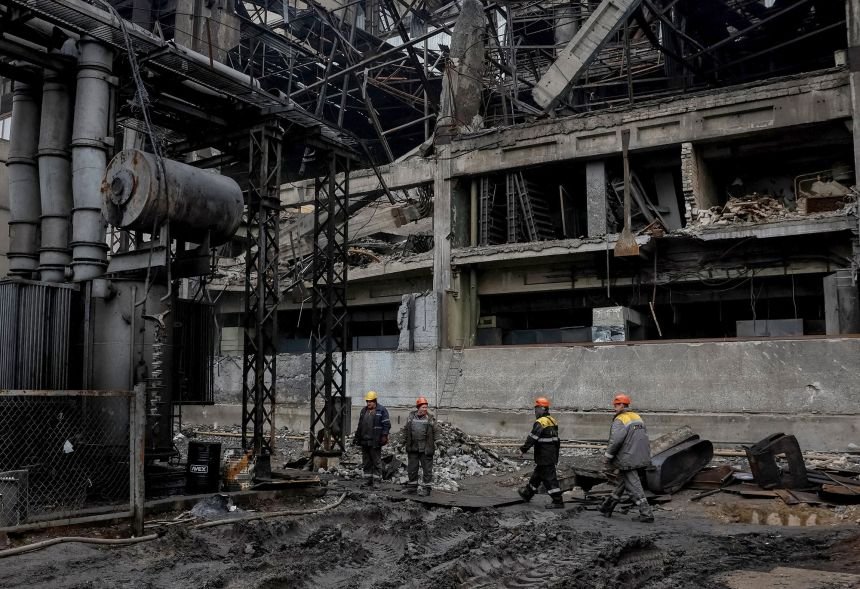
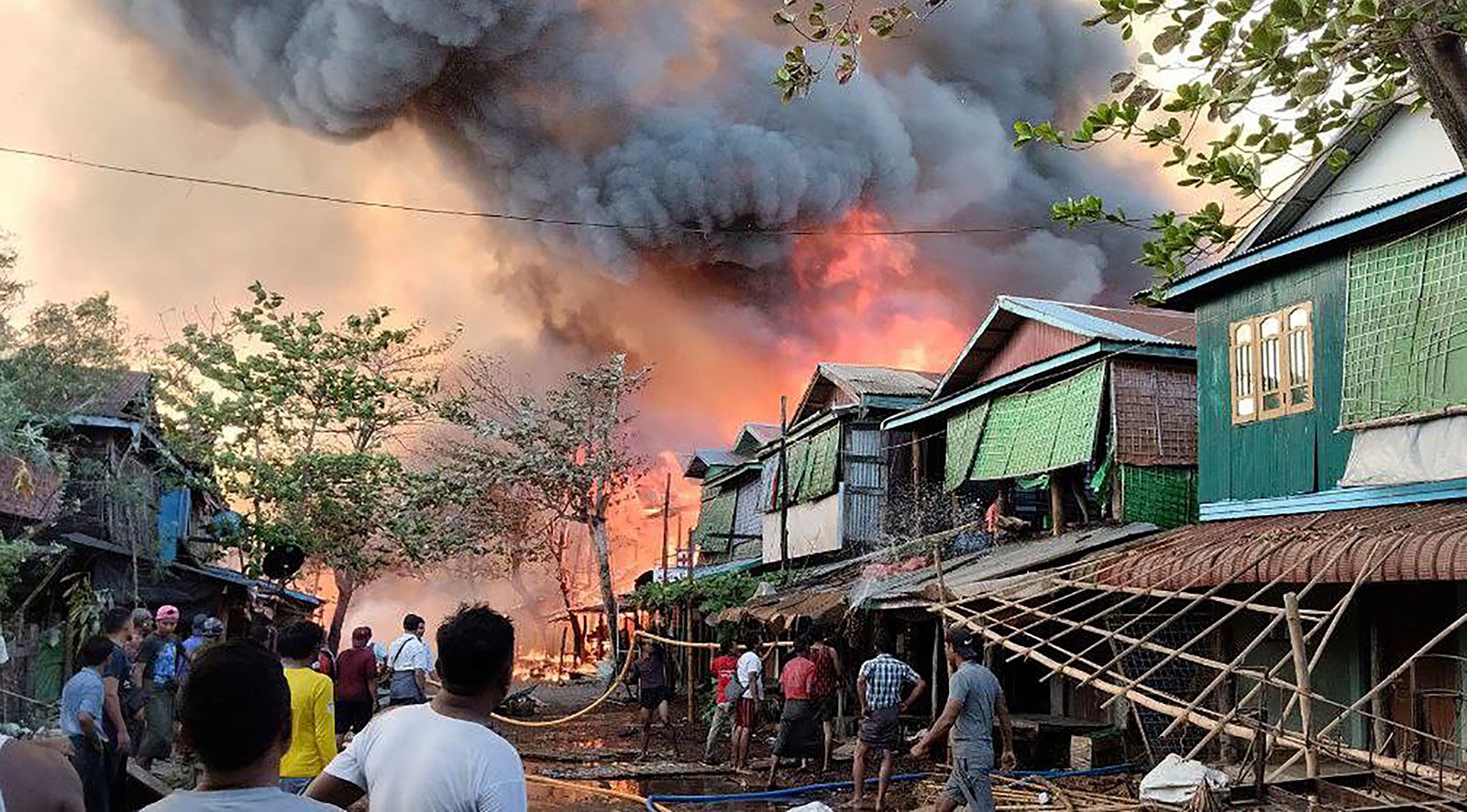
Across Sudan, the conflict has turned infrastructure into a target and movement into a weapon. Roads that once linked farms to markets now serve as toll gates for armed men. A rail junction becomes a prize. A water plant becomes a bargaining chip. The war is not only a contest over political power; it is a contest over the basic systems that let a society function. That is why Sudan’s crisis looks like more than war. It looks like national disintegration.
If Kordofan shows the war’s strategic contest, Darfur shows its darkest intent. Darfur carries the trauma of the early 2000s, when Janjaweed militias supported by the state conducted scorched earth campaigns against non Arab communities. The RSF’s origins are entangled with that history. That is why reports of targeted ethnic violence in Darfur have been received with such alarm: they suggest not only a continuation of war crimes, but a return to patterns the world once promised it would never tolerate again.
Multiple credible investigations describe RSF and allied militias committing large scale atrocities against civilians in Darfur: killings, mass sexual violence, looting, and forced displacement intended to prevent return. In West Darfur, communities such as the Masalit have been targeted in identity based attacks. Survivors describe being pursued because of who they are, hearing ethnic slurs at checkpoints, watching neighbors executed, and seeing homes burned after the residents fled an act that turns displacement into permanent exile.
The scale of displacement from West Darfur is itself evidence of intent. Reports describe hundreds of thousands of Masalit forced out of areas around El Geneina. When people are driven out not simply by generalized fighting but by violence that selects victims based on group identity, and when property is destroyed to prevent return, the aim is not control alone. It is removal. It is the reshaping of territory by terror, and it leaves behind landscapes of loss that cannot be repaired quickly even if the fighting stops.
By early 2025, the severity of these patterns led the United States to conclude that the RSF had committed genocide against specific groups in Sudan. Such determinations are rare and politically consequential. They reflect an accumulation of evidence: targeted killing, systematic rape, persecution, and forced displacement. Even without adopting legal language, the moral reality is clear: civilians are being attacked not as collateral damage, but as targets.
El Fasher’s long siege and eventual fall in late 2025 provides another window into how mass atrocity and humanitarian destruction overlap. El Fasher had become a major urban holdout against RSF dominance in Darfur. For months, it was encircled, with supply routes constrained and civilians squeezed between armed power and hunger. Starvation is often described as a “byproduct” of war, but in siege warfare it becomes a strategy. Roads are cut. Markets collapse. Medicine becomes scarce. Malnutrition rises first quietly and then explosively, as bodies run out of reserves.
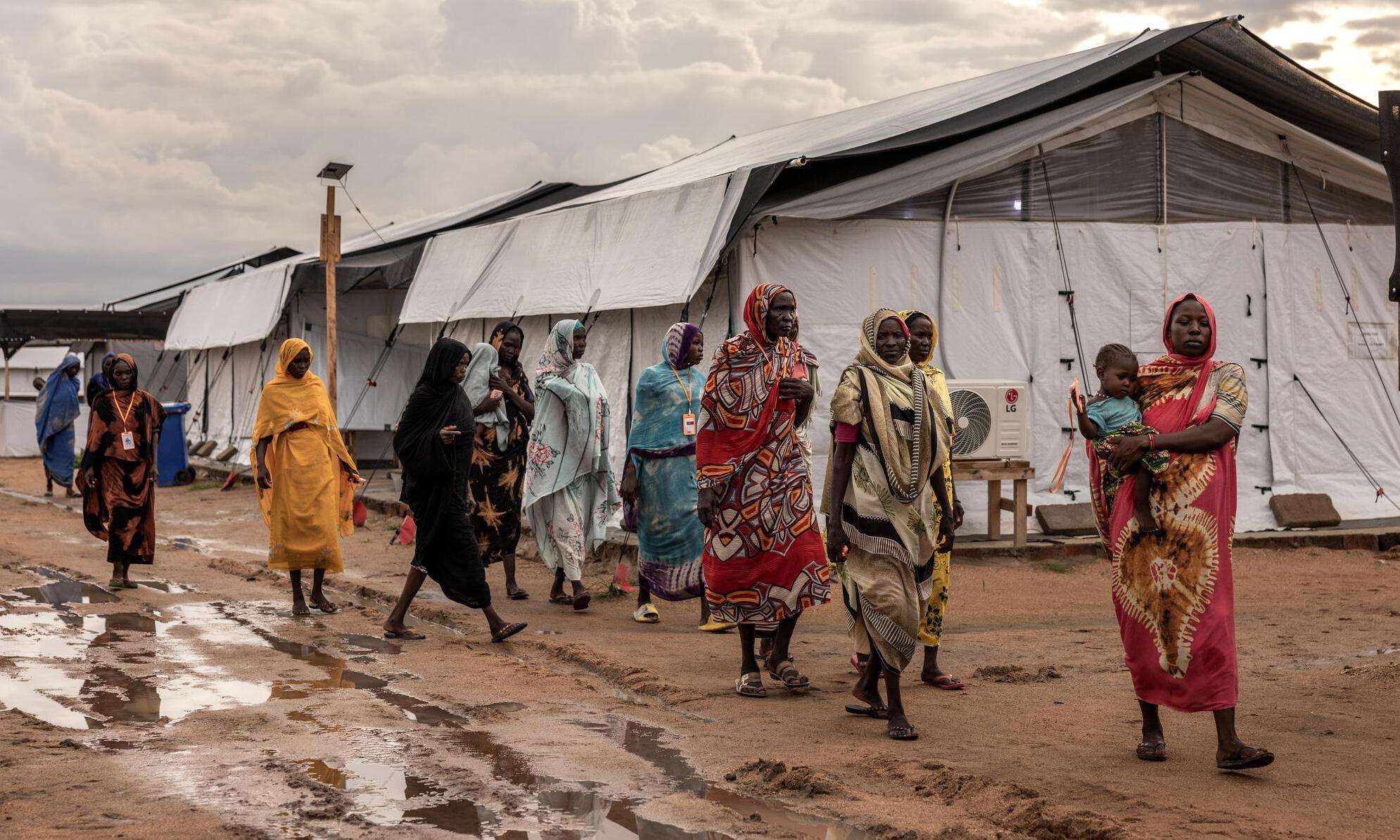
When El Fasher fell, medical organizations reported waves of survivors arriving in nearby towns such as Tawila. These people did not arrive like ordinary displaced families. They arrived exhausted, dehydrated, and malnourished. Clinics received patients with gunshot wounds who had traveled in hiding, moving at night to avoid armed men. Among the children, malnutrition rates were catastrophic. MSF described new arrivals where all children assessed were acutely malnourished, with many in severe stages. Health workers treated infants with gunshot wounds. In such moments, the war is no longer an abstraction. It is a place where a child’s body is both starving and bleeding at the same time.
Survivors also described violence during flight: bodies on roads, armed men hunting those trying to escape, convoys intercepted. Reports spoke of families torn apart and of people simply disappearing between the city and the camps. Not every story can be verified immediately in a war zone, and careful analysis admits uncertainty where it exists. But the consistency across independent reporting, the patterns documented by organizations with field presence, and the historical context of Darfur make the overall picture hard to deny.
International observers have described broader patterns of crimes against humanity in Darfur, including murder, sexual violence, torture, and persecution, coupled with starvation tactics. When starvation becomes a tool of war, the distinction between combatant and civilian collapses. The war no longer aims only to defeat an opposing force. It aims to make civilian life unlivable. That is a hallmark of atrocity, and it is why Sudan’s crisis cannot be treated as a distant civil conflict. It is a test of whether international norms mean anything when victims are far from the center of global politics.
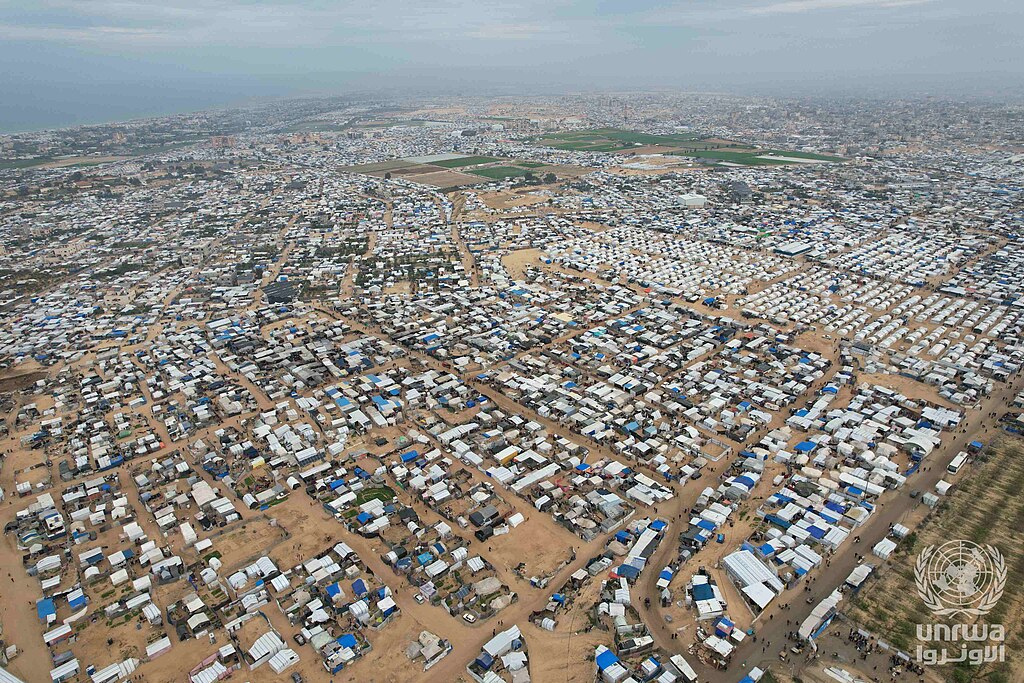
A Humanitarian Super Crisis and the World’s Uneven ResponseIf Darfur represents the moral center of the catastrophe, the humanitarian metrics represent its full scale. Sudan is now a country where displacement is not an exception; it is a condition of existence. Millions are internally displaced, often multiple times, living in schools, unfinished buildings, and makeshift camps. Millions more are refugees in neighboring countries, arriving in places that lack the infrastructure to absorb them. Displacement is not only large; it is destabilizing. It strains border communities and weakens already fragile economies. Neighboring states that host refugees face pressure on food systems, health services, and security. Refugee camps become permanent cities of plastic and dust.
Inside Sudan, the humanitarian emergency is amplified by the collapse of healthcare. Hospitals have been bombed, looted, occupied, or abandoned. Ambulances have been stolen. Doctors and nurses have fled, gone into hiding, or been threatened. In many places, a sick person’s first calculation is not which clinic to visit, but whether it is safe to move at all. Without functional health systems, the war’s indirect death toll rises sharply. Women give birth without skilled care. Children die from treatable infections. People with diabetes or kidney disease die not because their conditions are untreatable, but because treatment chains have been severed.
The hunger crisis is the most frightening expression of this collapse. Across Sudan, enormous numbers of people face acute food insecurity. Humanitarian agencies have warned repeatedly that famine conditions are spreading. In some areas, famine has been confirmed; in others, it is imminent. Famine is not simply hunger. It is the stage at which households run out of coping strategies. Families sell assets, then tools, then the future. Children stop growing. Adults lose the strength to work. People begin to die not from a single dramatic event, but from the slow failure of the body.
Aid workers describe Sudan’s situation as a super crisis because each emergency feeds the next. War blocks aid. Aid scarcity worsens hunger. Hunger drives displacement. Displacement overwhelms services. The collapse of services fuels disease. Disease amplifies death. Over time, the crisis becomes self reinforcing. Even when fighting pauses, the damage does not. A ceasefire cannot immediately rebuild hospitals. A truce cannot instantly restore a school system or a market network. Sudan’s crisis now has momentum of its own.
Humanitarian response depends on three things: money, access, and political will. Sudan is failing on all three. Funding has repeatedly fallen far below needs. Aid convoys face insecurity and obstruction. Bureaucratic barriers and active fighting prevent access. And the world’s political attention has been absorbed by other crises. The result is a cruel feedback loop: the less aid that arrives, the worse conditions become; the worse conditions become, the more expensive it is to respond; and the more expensive it is, the easier it becomes for donors to justify doing less.
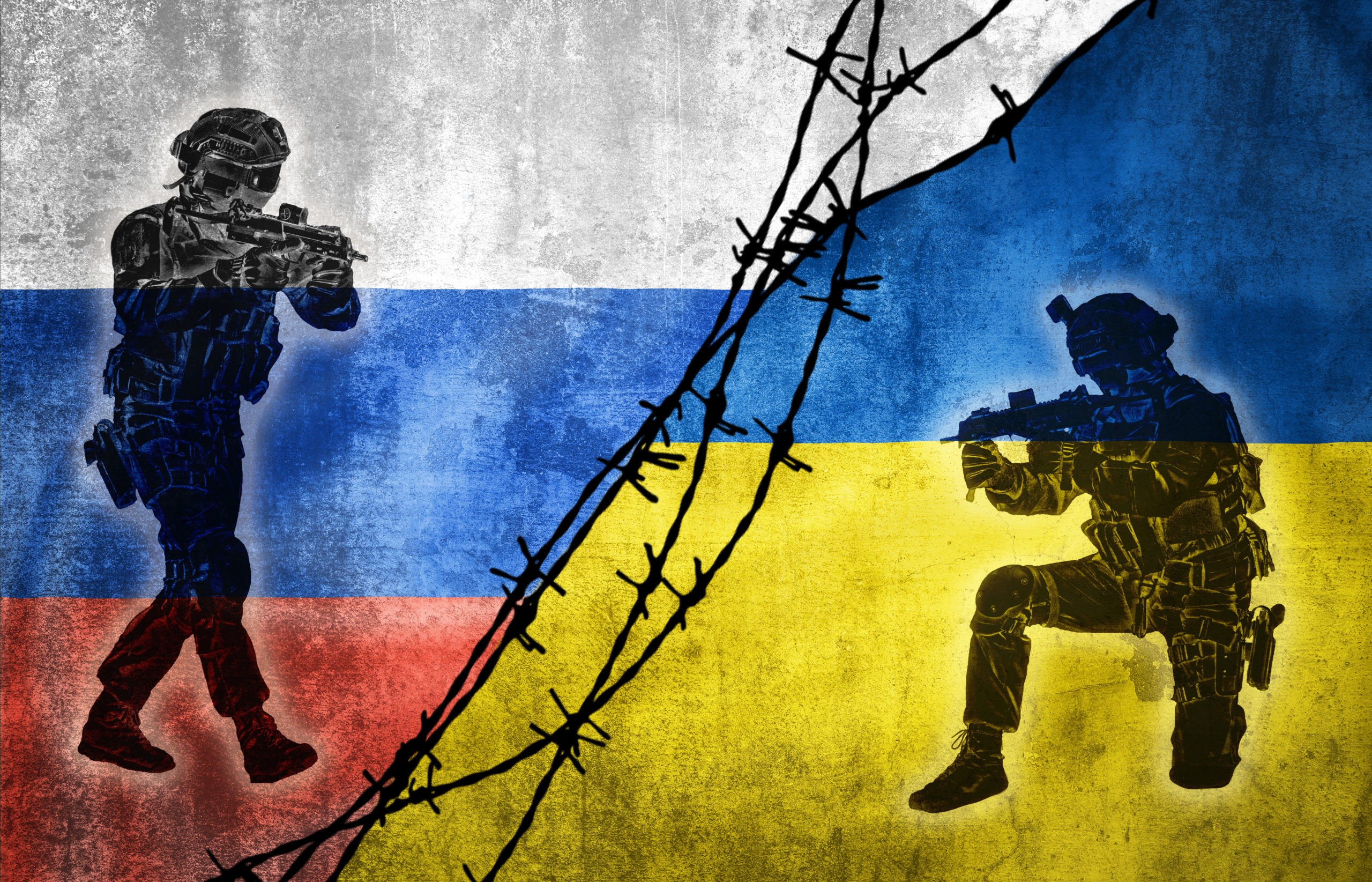
This is where comparison with Ukraine becomes unavoidable not to diminish Ukrainian suffering, but to illuminate global priorities. Ukraine has received extraordinary levels of diplomatic focus, humanitarian and financial support, and sustained media coverage. Sudan, facing an immense catastrophe, has received statements, partial sanctions, and chronic underfunding. Even early in Sudan’s war, comparative funding data showed that humanitarian appeals for Ukraine were met more rapidly and more fully than Sudan’s. Over time, the gap became a pattern, not an exception.
The reasons are partly geopolitical. Ukraine sits at the center of European security, tied to the strategic contest between Russia and NATO states. Sudan’s war is often framed as an internal African conflict in a region burdened by decades of underinvestment in peacebuilding. It is also politically complicated: two abusive armed actors fighting for power, civilians targeted by both, and foreign sponsors influencing the battlefield through funding, arms, and logistics. Complexity does not excuse indifference, but it often provides it.
There are also uncomfortable questions about empathy. Crises in Africa have historically struggled to generate sustained global attention comparable to crises in Europe. That pattern appears in media cycles, donor behavior, and political urgency. It appears in how quickly humanitarian language becomes abstract when victims are far away and rarely seen. The result is moral asymmetry: some people’s deaths are treated as an urgent scandal; others are treated as a tragic “background condition.” Sudan’s suffering has been pushed toward that background.
Diplomacy has not filled the gap. Multiple ceasefire talks have failed. Declarations of truce have been violated. External actors have continued to influence the war through political support and the movement of weapons. Senior officials in major capitals have publicly urged cessation of hostilities while also acknowledging that foreign backers have leverage over the combatants. That bluntness matters because it names a central truth: Sudan’s war is not sustained only by internal ambition. It is sustained by money, weapons, and political calculations that cross borders.
At the same time, humanitarian workers describe a crisis that is outpacing their capacity. Clinics cannot keep up. Therapeutic feeding programs are overwhelmed. Refugee camps cannot expand fast enough. Community kitchens shut down when donors do not renew funding. Each closure translates into a decision for a family: eat less, move again, or take desperate risks. Over time, these decisions grind down resilience until the next shock becomes lethal. The people most at risk are not only those in active battle zones, but those trapped in siege conditions, those displaced without services, and those in regions where famine is advancing faster than food deliveries.
Sudan’s catastrophe contains a warning for international relations more broadly. When mass atrocities and famine unfold without robust response, it signals to armed actors everywhere that the world’s red lines are negotiable. It weakens the deterrent value of international norms. It produces long term instability: displaced populations, shattered economies, and traumatized communities do not recover quickly. They generate downstream effects migration, regional tension, and cycles of violence that eventually reach beyond borders.
And yet Sudan’s crisis is not beyond response. There are levers. A major increase in humanitarian funding would immediately save lives through food aid, malnutrition treatment, and medical services. Coordinated diplomatic pressure especially among states with influence over the combatants could constrain the war’s external lifelines. Stronger accountability measures could raise the cost of atrocity, particularly if they target the networks that finance violence rather than only individual commanders. Humanitarian access agreements, backed by credible enforcement, could open corridors for food and medicine. None of these steps would end the war overnight. But they would change its trajectory, reduce suffering, and create space for political solutions.
The alternative is easier to describe and harder to live with: a slow motion catastrophe that the world learns to accept. That acceptance is what makes the genocide “silent.” Sudan’s victims are not asking for pity. They are asking for the basic protections international norms promise: that civilians are not legitimate targets, that starvation is not a weapon, that ethnic cleansing is not tolerated, and that survival should not depend on whether a crisis is convenient to notice.
If the world can mobilize at scale for some wars, it can mobilize for Sudan. The question is not capacity. It is choice. Each day that choice is delayed, Sudan’s war writes its own answer in mass graves, in empty classrooms, and in the wasted bodies of children who never had anything to do with the generals’ power struggle. The silence will not protect anyone. It will only ensure that, years from now, the world will speak of Sudan in the past tense, with the familiar regret of those who knew and did not act.