Ankara’s Test Can NATO Turn the 5% Defence Pledge Into Real Deterrence
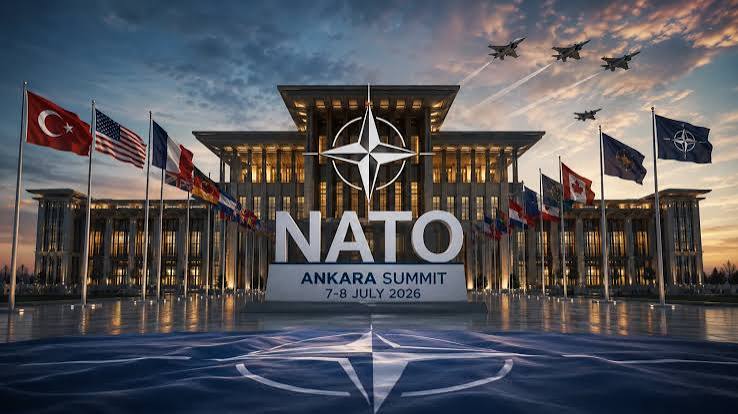
The Ankara summit will not be judged by whether NATO leaders repeat the 5% pledge agreed at The Hague. It will be judged by whether the Alliance can turn that pledge into deployable forces, deeper industrial capacity and a more credible war-prevention posture on Europe’s eastern flank. The official NATO line is now clear: by 2035, Allies should spend 3.5% of GDP on core defence and up to 1.5% on resilience, infrastructure, innovation and the defence industrial base, with progress reviewed in 2029. Support to Ukraine now counts directly towards that effort.
The problem is implementation. NATO’s own figures show a dramatic rise in spending since 2021, but they also show how far most Allies remain from 5%. At the 2021–2025 pace, only a small group led by Poland and the Baltic states would approach 5% within this decade; many others would need well over ten years, and some are not on a rising trajectory at all. Using NATO’s 2025 estimate of total allied defence spending at USD 1.588 trillion and 2.76% of GDP, moving to 5% at today’s GDP levels would imply roughly USD 1.29 trillion more per year across the Alliance; Europe and Canada alone would need roughly USD 731 billion more. These are not marginal budget adjustments. They are state-capacity projects.
That is why Ankara matters. Ahead of the summit, Secretary General Mark Rutte has framed the test in three linked files: defence investment, defence-industrial production and continued support for Ukraine. NATO’s own industrial-policy documents point in the same direction, from the Defence Production Action Plan to the Industrial Capacity Expansion Pledge and the updated 2025 production plan. In other words, deterrence now depends less on declarations than on production runs, logistics, stockpiles, readiness and the ability to sustain Ukraine while rebuilding Allied forces at speed.
A realistic conclusion follows. NATO can make the 5% pledge strategically meaningful, but only if Ankara shifts the Alliance from target-setting to execution: annual national implementation plans, pooled procurement, defence-industry financing, fast-track contracting, and common metrics that measure actual deterrent effect rather than mere expenditure totals. If Ankara delivers that turn, 2026–2030 can become the implementation phase. If it does not, 5% will remain more slogan than shield.
Ankara is testing execution, not rhetoric
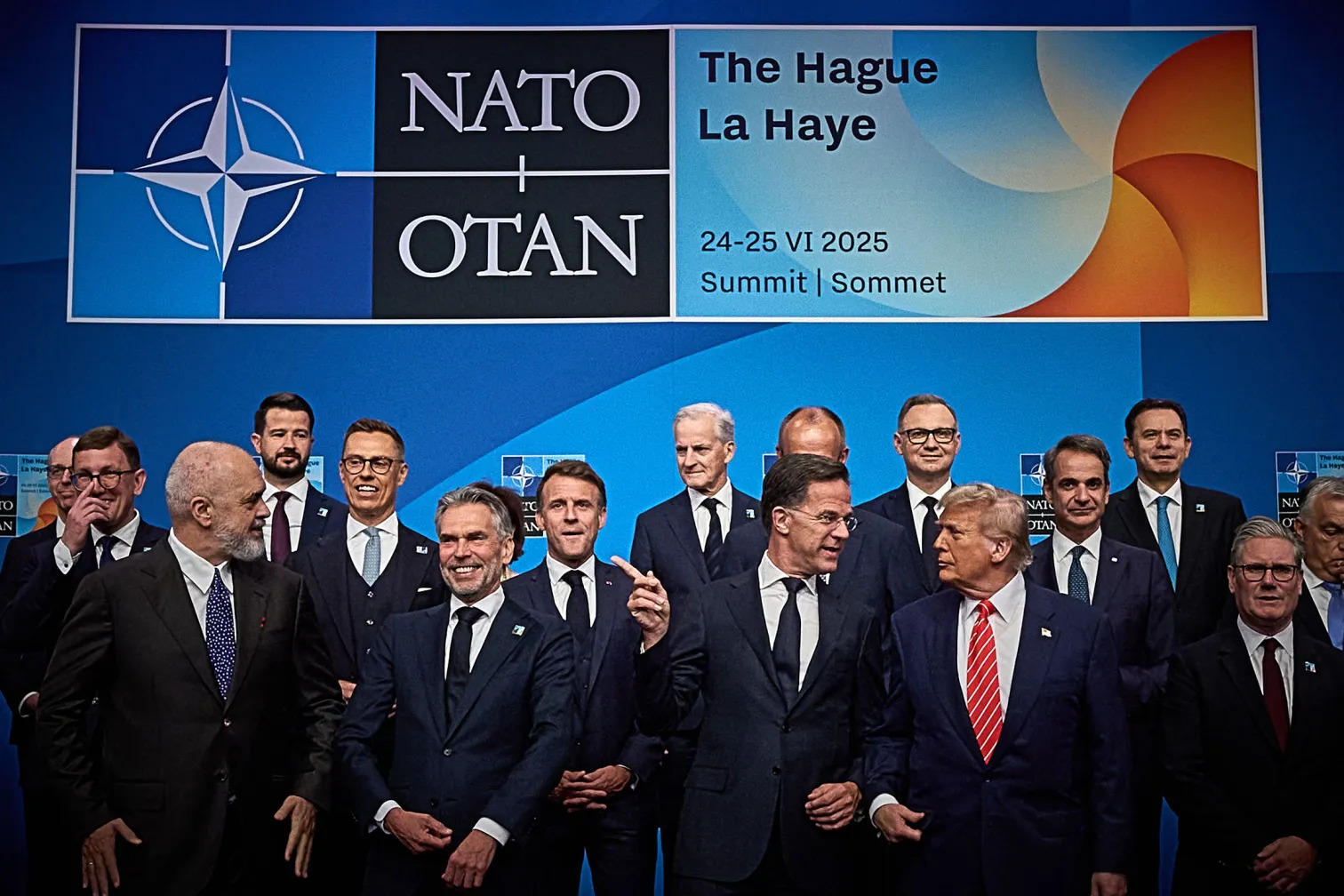
NATO’s official trajectory into Ankara was set at The Hague. The summit overview page says leaders focused on deterrence and defence, “increasing defence spending and production”, and support for Ukraine. The Hague declaration then codified the headline commitment: 5% of GDP by 2035, split between at least 3.5% for core defence and up to 1.5% for resilience and defence-related spending, with a review in 2029. It also explicitly states that direct contributions to Ukraine’s defence and defence industry count toward Allies’ spending totals.`
That built on Washington in 2024. There, NATO had already admitted that in many cases spending beyond 2% would be needed to close capability gaps, while committing to long-term support for Ukraine and describing Kyiv’s path toward Euro-Atlantic integration as “irreversible”. NATO’s Ukraine support architecture now includes NSATU in Wiesbaden and the long-term security assistance pledge agreed in Washington.
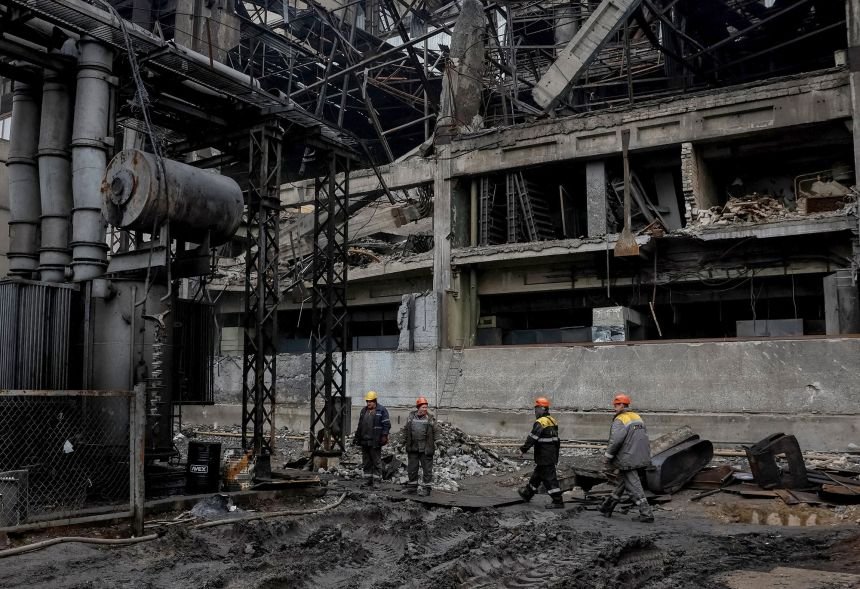
What was hit
Ahead of Ankara, public NATO messaging has narrowed further. Reuters, reporting remarks by Rutte in Washington in June 2026, said the summit would underscore three priorities: commitment to the 5% trajectory, new defence-industrial contracts, and reaffirmed support for Ukraine, with President Zelenskyy expected to attend. That framing matches NATO’s own defence-industry agenda, which since Vilnius and Washington has centred on aggregated demand, industrial-capacity expansion, interoperability and faster production.
The strategic meaning is straightforward. Ankara is not a summit about whether Russia is a threat; that was settled long ago in NATO communiqués. It is a summit about whether the Alliance can generate enough mass, readiness and industrial depth to make Russian coercion look likely to fail. That is deterrence in practice.
The numbers expose both progress and the gap
NATO’s 2025 defence-expenditure compendium is the best official baseline. It confirms that all Allies met or exceeded the old 2% benchmark in 2025, up from only three in 2014, and that European Allies and Canada increased spending by 20% year-on-year. But it also shows that the new 5% commitment starts from a very low base for most members.
Using NATO’s 2025 estimates and 2021 baselines, the table below compares each Ally’s latest official defence-spending share of GDP, its 2021 baseline, the absolute change in real defence spending, and the approximate number of years it would take to reach 5% if the 2021–2025 pace of change in defence share of GDP continued unchanged. This last column is deliberately heuristic rather than predictive: it is a measure of momentum, not a forecast.
Why 5% is hard in practice
The first barrier is fiscal. IMF-linked reporting in 2025 pointed to rising global public debt, higher interest costs and growing pressure from defence and social spending simultaneously. In Europe, Fitch estimated that the EU might be able to mobilise around EUR 500 billion over four to five years for defence, still below the scale often discussed in Brussels. For high-debt states such as France, Italy and Belgium, the politics of additional defence outlays are therefore inseparable from taxes, welfare choices and borrowing rules.
The second barrier is political. NATO can set a common target, but threat perception remains uneven. Frontline states see deterrence as an immediate insurance premium; southern and fiscally constrained Allies face stronger domestic pressure to defend social budgets. The pledge’s elasticity partly reflects that reality: 1.5% can be spent on resilience, infrastructure and innovation rather than purely on armed forces, making the target more politically saleable but also more vulnerable to creative accounting.
The third barrier is industrial. NATO’s own defence-industry pages concede that delivery times have lengthened for key munitions and that the Alliance still needs better metrics for supply-chain stress and industrial capacity. The updated 2025 Defence Production Action Plan was designed precisely because the original post-2023 effort was not enough. More money cannot deter if it chases the same limited production lines.
The fourth barrier is burden-sharing inside a changing transatlantic bargain. Ankara comes amid visible pressure from Washington for Europeans to carry more of the conventional load, and amid EU efforts to finance “Readiness 2030” through loans, fiscal flexibility and more joint procurement. That can strengthen NATO if it produces more capacity. It can weaken NATO if it creates new industrial barriers or duplicates structures across NATO and the EU. Rutte has already warned against new defence-industry “barriers” that fragment the transatlantic market.
The rapid builders offer useful lessons
Poland is the clearest case of scale and intent. NATO data show its defence burden rising from 2.19% of GDP in 2021 to 4.48% in 2025, with real spending up by roughly USD 19.5 billion. Warsaw then signalled a 5% ambition for 2026 and continues to sign major procurement deals, most recently a submarine contract with Saab. The lesson is that rapid build-up is possible when threat perception, financing instruments and political consensus align. The caution is equally clear: absorption, training, maintenance and ammunition supply become the binding constraints once procurement accelerates.
The Baltic states show what urgency looks like. Lithuania moved from 1.95% in 2021 to 4.00% in 2025; Latvia from 2.16% to 3.73%; Estonia from 2.02% to 3.38%. Lithuania has already pledged 5 6% from 2026 and tied that ambition to domestic production, including Rheinmetall ammunition investment. The lesson is that deterrence strengthens fastest when spending is fused with mobilisation, resilience and local industry rather than treated as a narrow budget line. The limitation is scale: small states still depend on larger Allies for air and missile defence, heavy sustainment, command and enablers.
Türkiye offers a different lesson. NATO figures show a rise from 1.61% of GDP in 2021 to 2.33% in 2025, alongside a real spending increase of about USD 9.2 billion. Ankara enters the summit arguing that defence-trade restrictions should be lifted and that Turkey should be more fully integrated into European security initiatives. The strength of the Turkish model is industrial depth and a long standing push for strategic autonomy. The weakness is that alliance politics can blunt the deterrent value of that industrial capacity when export controls, sanctions disputes or interoperability frictions intrude.
What NATO should do after Ankara
First, NATO should require annual national implementation plans, not just broad pledges. The Hague declaration already points in this direction. Ankara should specify milestones for 2027 and 2029, and each plan should separate core-force spending from wider resilience spending. Second, the Alliance should make pooled procurement the default for munitions, air and missile defence, ISR enablers and logistics stocks. NATO’s Defence Production Action Plan was built to aggregate demand and reduce fragmentation; Ankara should expand that logic from policy into multi-year contracting.
Third, support to Ukraine should be conditional, sustained and integrated into Allied industrial mobilisation. NATO already counts direct support to Ukraine’s defence and defence industry as part of Allied effort. The next step is to use Ukraine as a co-producer, test-bed and force-development partner rather than treating it as a separate aid line. That would strengthen both Ukraine’s survival and NATO’s own deterrence depth.
Fourth, NATO should measure deterrence, not just spending. The core indicators should be war stocks, mobilisation timelines, brigade and air-defence readiness, infrastructure resilience, sealift and rail availability, and industrial surge capacity. NATO’s own industry documents already acknowledge the need for better production metrics. Ankara should extend that principle across deterrence as a whole.
Risks, limits and a realistic timeline
There are real risks in moving too fast and too crudely. A surge in orders can inflate prices inside already tight defence supply chains. Governments can crowd out civilian priorities and trigger domestic backlash if they present 5% as a book-keeping demand rather than a security strategy. A badly coordinated build-up can also intensify arms-race dynamics without delivering usable combat power. NATO’s own documents on industrial capacity are, in effect, warnings against that outcome.
The data also have limits. NATO’s 2024 and 2025 figures are estimates, Germany’s 2025 figure was not published in the June 2025 compendium, and the full public Ankara programme was not yet available in primary NATO form at the time of writing. So any projection from 2021–2025 is indicative, not deterministic.
Still, the broad conclusion is solid. By 2030, NATO can plausibly turn the pledge into a credible implementation pipeline if Ankara locks in annual plans, industrial pooling and measurable readiness targets. By 2035, a differentiated 5% outcome is possible across the Alliance. But a uniform, rapid march to 5% for every Ally is not credible on present fiscal and political trajectories. Ankara can therefore succeed only if it reframes the pledge as a deterrence programme, not a spending slogan.