Hunter Satellites in the Grey Zone: When Close Approaches in Orbit Become Acts of War
Military competition in orbit has entered a more intimate and dangerous phase. China, Russia and the United States operate satellites capable of approaching, inspecting and manoeuvring around other spacecraft. The same rendezvous-and-proximity operations that enable repair, refuelling and debris removal can also support surveillance, jamming, dazzling, grappling or destruction. In 2026, increasingly precise manoeuvres, public discussion of orbital weapons and exercises involving satellites near potential adversaries have made this ambiguity a tool of statecraft rather than a technical side effect.
A close approach is not automatically an act of war. International law applies in space, but it does not establish a universal exclusion zone around a satellite or a fixed distance at which proximity becomes aggression. The Outer Space Treaty requires due regard for other states’ activities and consultation where harmful interference is foreseeable. The United Nations Charter prohibits the threat or use of force and preserves the right of self-defence after an armed attack. Between those principles lies a wide grey zone in which a satellite may shadow another, move into a tactically advantageous orbit or compel defensive manoeuvres without touching or disabling it.
Distance alone cannot resolve the problem. Orbital mechanics mean that a spacecraft hundreds of kilometres away may possess a more credible attack opportunity than one passing much closer. The relevant evidence is behavioural and contextual: whether the approach was notified or consented to; the manoeuvring history and apparent capability of the pursuing satellite; the sensitivity of the target; communications between the parties; whether the target was forced to expend fuel or suspend its mission; and whether the pursuer caused interference, contact or loss of function. The same manoeuvre has different strategic meaning near a commercial imaging satellite, a servicing client and a missile-warning spacecraft during a nuclear crisis.
The most useful threshold is therefore an escalation ladder. Unnotified inspection and persistent shadowing may be irresponsible or coercive without amounting to force. Manoeuvres that deliberately obstruct operations, repeatedly force evasive action or create an imminent collision risk may constitute harmful interference and, in severe cases, a threat of force. Jamming, dazzling or cyber intrusion that produces significant effects may become a use of force. Grappling, displacement, permanent disablement or destruction of a spacecraft—particularly one supporting warning, command or collective defence— could amount to an armed attack even if no debris is created and no person is killed.
Deterrence requires rules as well as resilience. States should notify uncoordinated close approaches, prohibit contact or object release without consent and create rapid orbital hotlines. Alliances need response options ranging from attribution and protective manoeuvres to sanctions and proportionate countermeasures. Shared awareness and resilient constellations should reduce pressure to fire first, while special restraints protect nuclear warning and command systems from ambiguous interference.
The objective is not to outlaw proximity operations but to deny dual-use capability a licence for coercion. Behaviour-based guardrails must apply reciprocally to American, Chinese, Russian and commercial spacecraft.
Proximity is not aggression, but ambiguity is becoming a weapon
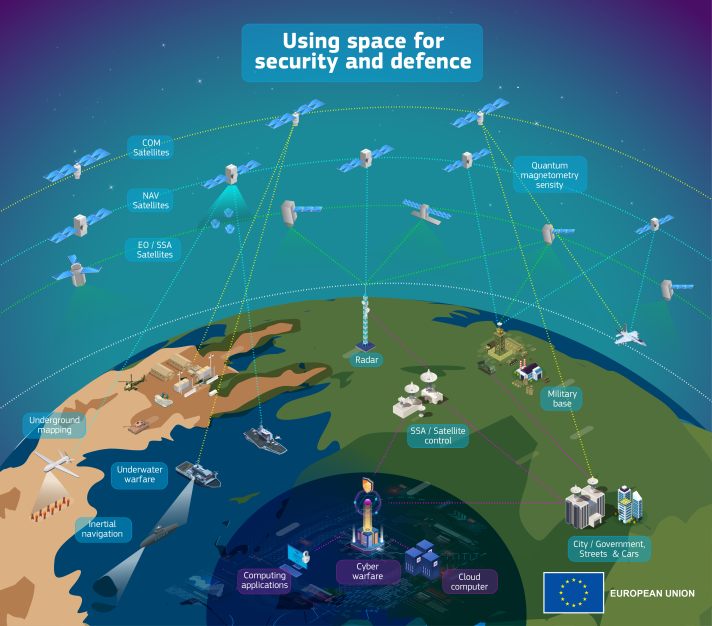
Satellites have always passed one another. What has changed is the ability to make those encounters deliberate. Modern spacecraft can alter altitude and inclination, match another object’s orbit, hold a relative position and conduct repeated approaches. Sensors can inspect a target at close range, while robotic arms and docking systems can manipulate it. In-orbit refuelling may extend the life of an expensive platform; the same fuel, navigation software and dexterity can allow a spacecraft to stalk an adversary for months.
These capabilities are no longer experimental curiosities. Chinese programmes have demonstrated sophisticated rendezvous, coordinated manoeuvring and the movement of a defunct satellite to a graveyard orbit. In 2025, two Chinese spacecraft appeared to conduct an on-orbit refuelling experiment in geostationary orbit. Russian “inspector” satellites have performed repeated approaches, and two Russian spacecraft came within only a few metres of each other in April 2026, demonstrating extraordinary precision even though that particular encounter was between Russian assets. The United States also operates manoeuvrable inspection satellites and has expanded military exercises in orbit.
The competition is increasingly explicit. In September 2026, Reuters reported that American and Chinese planners were preparing for conflict in space and that Chinese military-linked researchers were developing satellites able to pursue, capture and refuel spacecraft. The United States and United Kingdom had also conducted a coordinated operation near a suspected Chinese intelligence satellite. Days later, a senior US Space Force commander acknowledged American on-orbit weapons. Beijing called the disclosure evidence of an arms race; Moscow renewed its demand for a binding prohibition.
The rhetoric obscures a shared reality. China, Russia and the United States all possess technologies that can support hostile proximity operations, and all have incentives to describe their own systems as defensive. A “bodyguard” satellite designed to protect a valuable spacecraft may look indistinguishable from a co orbital interceptor until it acts. A servicing vehicle approaching a cooperative client follows many of the same steps as a vehicle preparing to grapple an unwilling target. Even a close inspection can extract sensitive information about antennas, sensors, payloads and vulnerabilities without causing a measurable interruption.
This ambiguity creates military utility below the threshold of attack. A state can shadow a reconnaissance satellite to demonstrate access, force it to manoeuvre, collect intelligence or signal that it could be disabled in a crisis. The pursuer may impose costs while denying hostile intent. The target must then choose among equally unattractive responses: remain in place and accept surveillance; spend finite fuel to evade; reveal its own capabilities; deploy a guardian; or threaten a response that may appear disproportionate to an approach that caused no physical damage.
Orbital pursuit also compresses time. Ground controllers may have hours to assess a slow-developing encounter in geostationary orbit, but far less time in low Earth orbit. Tracking data can show position and velocity, yet it rarely reveals payload status or political intent. An unexpected manoeuvre during a terrestrial crisis may be interpreted through worst-case assumptions. Because satellites enable communications, navigation, intelligence, air and missile defence, conventional operations and nuclear warning, commanders may believe that waiting for visible damage means losing the systems needed to respond.
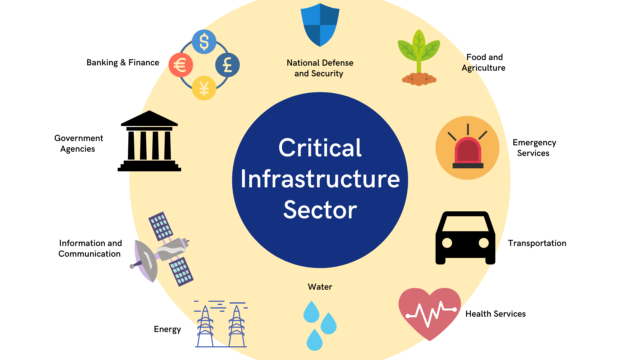
Commercialisation further complicates protection. A privately owned satellite may be licensed in one state, operated from another and serving several militaries alongside civilian users. Its loss could impair battlefield operations while disrupting emergency services, shipping, aviation, finance and connectivity.
The grey zone is therefore not defined by a lack of consequences. It is defined by the difficulty of classifying purposeful conduct before those consequences become irreversible. The policy challenge is to distinguish legitimate proximity operations from coercion and coercion from attack without turning every orbital manoeuvre into a casus belli.
International law draws a threshold without defining the approach
The legal framework is broader than the frequent claim that space is a “lawless” domain, but it is less precise than military operators would prefer. Article III of the Outer Space Treaty makes clear that activities in outer space are conducted in accordance with international law, including the United Nations Charter. Article IV prohibits placing nuclear weapons or other weapons of mass destruction in orbit. It does not prohibit all conventional weapons, dual-use satellites or rendezvous technology. Possession of an orbital capability is therefore not, by itself, unlawful.
Article IX supplies the most relevant peacetime obligation. States must conduct activities with due regard to the corresponding interests of others and undertake consultations when they have reason to believe that an activity would cause potentially harmful interference. This supports expectations of notification, coordination and caution, especially during a deliberate approach. It does not specify a minimum separation distance, require consent for every inspection or identify when harmful interference becomes force.
Nor can a state simply declare sovereign territory around its satellite. Outer space is not subject to national appropriation, and spacecraft regularly share orbital regimes. A rigid keep-out zone would be difficult to apply across crowded low Earth orbit, where conjunctions occur frequently and relative speed can be high. It could also be exploited to exclude competitors from useful orbits. Safety standards should therefore regulate behaviour and risk rather than imitate terrestrial borders.
The Charter provides the escalation framework. Article 2(4) prohibits the threat or use of force, while Article 51 recognises self-defence if an armed attack occurs. International practice has not settled exactly how these categories apply to space operations. The widely used effects-based approach asks whether the scale and consequences resemble force in another domain. Physical destruction is the clearest case, but the method is not decisive. A cyber operation, directed-energy attack or grapple that permanently disables a satellite may produce the same operational result as a missile without an explosion.
Capability and intent must also be separated. A satellite equipped with a robotic arm may be able to seize another spacecraft, but the capacity alone is not an unlawful threat of force. A threat normally requires communication—through words or conduct—of an intention to use force unlawfully. Context can turn manoeuvring into that communication. Moving a co-orbital vehicle near a missile-warning satellite during an acute nuclear confrontation, after issuing a demand and refusing contact, would convey a different message from a notified approach to a commercial servicing client.
An unconsented approach can still violate obligations below the use-of-force threshold. Persistent shadowing may breach due regard if it creates unreasonable operational risk. A manoeuvre that forces a target to burn fuel repeatedly may interfere with its mission and shorten its life. Releasing a small object in its path may create a collision hazard even if contact is avoided. These actions can justify protest, consultation, public attribution, retorsion or proportionate countermeasures without necessarily authorising force in self-defence.
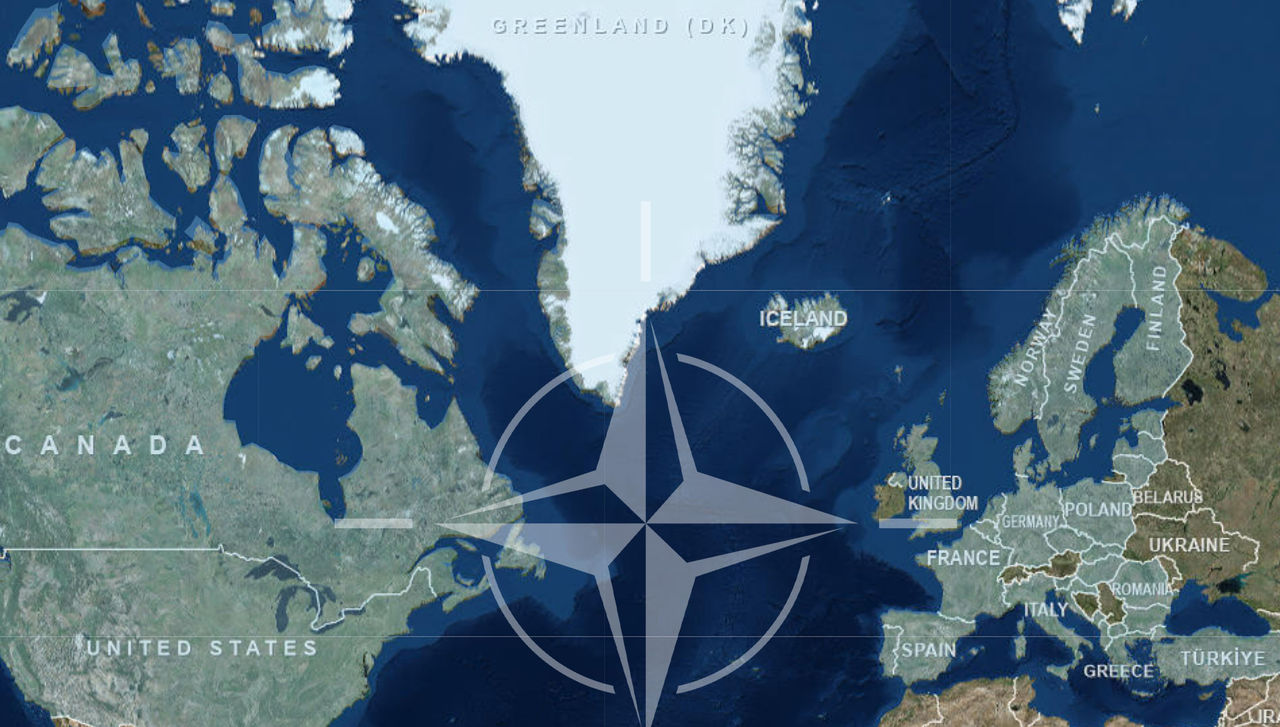
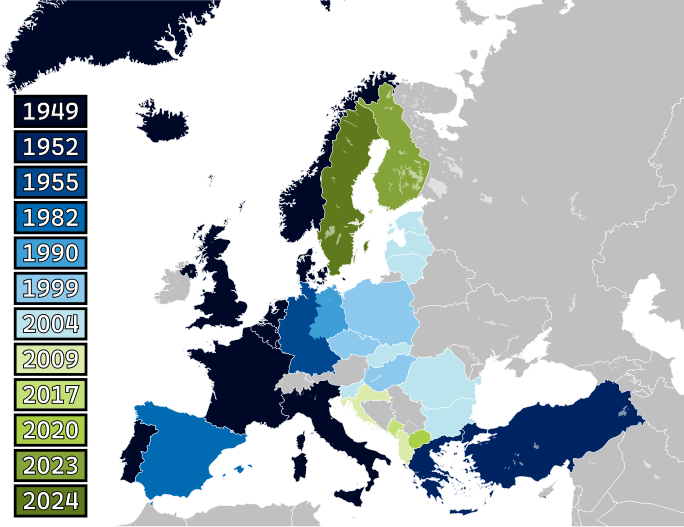
“Act of war” is a political phrase, not a legal switch. A use of force may be serious without reaching the higher armed-attack threshold that permits self-defence. NATO has stated that attacks to, from or within space could lead to Article 5, but any collective-defence decision would be taken case by case. That flexibility leaves room for miscalculation. An attacker may assume that reversible disruption remains below the threshold; the victim may see the opening of a wider campaign. The loss of a replaceable imaging satellite differs from interference with nuclear warning or strategic communications. Target function and effects on Earth are therefore central to the legal analysis.
The escalation ladder runs from shadowing to strategic attack
A practical threshold should combine conduct, capability, context and consequence. Distance is often the least reliable factor: geometry, relative velocity, propellant and time to intercept determine danger. A nearby spacecraft moving away predictably may be less threatening than a more distant vehicle that has matched the target’s orbit and can close rapidly.
At the first level are coordinated operations. A servicing spacecraft approaches with consent, exchanges identity and trajectory information, maintains communications and follows an agreed plan. These activities should remain lawful because inspection, repair, refuelling and debris removal support a sustainable space economy.
The second level is unnotified observation. A satellite changes orbit to inspect or trail another spacecraft without consent. That can gather intelligence or demonstrate access without automatically amounting to force. Risk rises if the pursuer conceals its identity, ignores messages, approaches from a tactically advantageous direction or remains after the target objects. Pattern matters more than a single pass.
The third level is coercive manoeuvring. The pursuer repeatedly forces the target to evade, occupies an operationally important position, interferes with solar arrays or sensors through its geometry, or creates an avoidable collision probability. Fuel expenditure is not trivial: every defensive burn can reduce mission life and may disrupt service. If the behaviour is deliberate and tied to a demand, it may communicate a threat of force. Even without a demand, sustained pursuit can become harmful interference and justify coordinated countermeasures.
The fourth level is reversible functional attack. Jamming, laser dazzling, cyber intrusion or electromagnetic interference may degrade service without physical damage. Classification depends on intensity, duration, recoverability and downstream effects. Brief disruption of a redundant channel differs from sustained loss of military command links during combat; a reversible method can still produce effects comparable to a conventional strike.
The fifth level is physical control or permanent disablement. An unconsented grapple, docking, displacement, severing of an antenna or manipulation that prevents recovery crosses a much clearer line. Moving a satellite out of its assigned orbit can end its mission without fragmentation. Such an operation appropriates control of another state’s registered object and may create severe consequences on Earth. It is highly likely to be treated as a use of force and, depending on scale and function, an armed attack.
The final level is destruction. A kinetic interceptor, co-orbital collision or deliberate action that causes catastrophic failure is the least ambiguous case. Debris generation compounds the harm by threatening spacecraft belonging to many states for years. Yet a “clean” attack that produces no debris should not be considered less serious if it eliminates the target. The threshold should protect function, not privilege one weapon design.
Target type can move an incident up this ladder. Interference with a satellite supporting nuclear command, control or missile warning carries exceptional escalation risk because it may be interpreted as preparation for a first strike. The same applies to systems essential to national leadership communications or the detection of attacks. States should avoid purposeful close approaches to these platforms during crises and establish channels to clarify anomalies immediately. Strategic restraint here is a firebreak, not recognition of a sovereign zone. Alliance and commercial systems require similar clarity. An attack on a privately owned satellite providing services to several NATO members could have collective effects even if ownership is dispersed. Allies should decide in advance how they will assess attacks on hosted payloads, leased capacity and multinational constellations. Ambiguity about coverage may invite an adversary to test the boundary one spacecraft at a time.
Build rules of the road before militaries build red lines
The first requirement is a common vocabulary. States should report planned rendezvous, identify an operator contact and provide enough trajectory information to assess risk. During an uncoordinated approach, the pursuer should answer queries and explain its safety plan. Notification would not create a veto over orbital movement, but silence would become evidence of intent.
A kilometre rule would mislead, but behaviour-based safety standards are possible. Approaching spacecraft should use passive-safe trajectories, avoid blocking essential sensors or power generation and maintain margins suited to the orbital regime. Contact, docking, grappling or object release toward another spacecraft should require consent except in an immediate emergency.
The second requirement is an orbital incident mechanism. Major powers need channels able to reach an operator during an encounter, not diplomatic notes after it ends. Alliance hotlines should connect space commands, and the United Nations could maintain national points of contact. Short notices covering identity, status, manoeuvre and closest approach could prevent an anomaly being read as an attack.
Third, space-domain awareness should become a stabilising public good. Governments should fuse national, commercial and allied observations, set evidentiary standards and release incident reports where possible. Neutral analysis would be valuable when great-power claims conflict. Tracking cannot reveal intent, but it can expose patterns, verify compliance and make denial harder.
Fourth, alliances need a graduated response doctrine. NATO and other security partnerships should pre plan responses to shadowing, forced manoeuvres, reversible interference and permanent disablement. Early steps may include consultation, attribution, diplomatic warning, coordinated protective manoeuvres and economic measures. More severe effects may justify countermeasures or self-defence. The response need not occur in space; it should be lawful, proportionate and chosen to restore security rather than satisfy symmetry.
Fifth, resilience must support restraint. Disaggregated constellations, interoperable commercial services, protected ground networks, on-orbit spares and rapid launch can reduce the strategic value of attacking a single satellite. If a close approach cannot blind an opponent or create a decisive first-mover advantage, leaders gain time to investigate. Resilience is therefore not only a way to continue fighting after an attack. It is a means of lowering the pressure to pre-empt one.
Special arrangements are needed for nuclear warning and command systems. The United States, China and Russia should exchange protected notifications about anomalies and adopt a reciprocal commitment not to conduct purposeful close approaches, interference or cyber operations against designated strategic warning satellites. The designation process would need limits to prevent every military spacecraft from claiming sanctuary. Even a narrow agreement would reduce the chance that an orbital encounter is mistaken for preparation for a nuclear strike.
The diplomatic venue already exists. The United Nations Open-Ended Working Group on preventing an arms race in outer space has a 2025–2028 mandate. It should focus on conduct that can be observed and verified: notification, communication, non-interference, non-contact without consent and avoidance of debris-producing tests. Legal debates about banning “weapons in space” will continue to founder on definition and verification if almost any servicing satellite can be dual-use. Rules for behaviour can constrain how capability is employed without pretending the capability can be uninvented.
Reciprocity is essential. Washington cannot credibly condemn Chinese or Russian close approaches while treating similar American operations as inherently benign. Beijing cannot present robotic capture and refuelling as peaceful while refusing transparency about military-linked missions. Moscow cannot invoke arms-control principles while conducting unexplained inspection activity. Each major power will retain sensitive programmes, but all should accept that unannounced coercive behaviour by its own satellites contributes to the same insecurity it attributes to others.
Licensing states should require proximity-capable commercial spacecraft to register contacts, carry reliable identification, keep manoeuvre logs and report incidents. Governments should also clarify protection for private satellites supporting military missions and procedures for preserving evidence after interference or pursuit.
These measures will not remove strategic rivalry. They can, however, make certain behaviours legible and create off-ramps before a crisis. The alternative is a system in which every capable satellite is presumed to be a weapon, every unexpected manoeuvre demands an immediate response and the first state to fear an attack has the strongest incentive to act. That is an unstable basis for a domain on which the world’s civilian and military infrastructure increasingly depends.