Kaliningrad’s Nuclear Tripwire: How a Baltic Crisis Could Outrun NATO Escalation Control
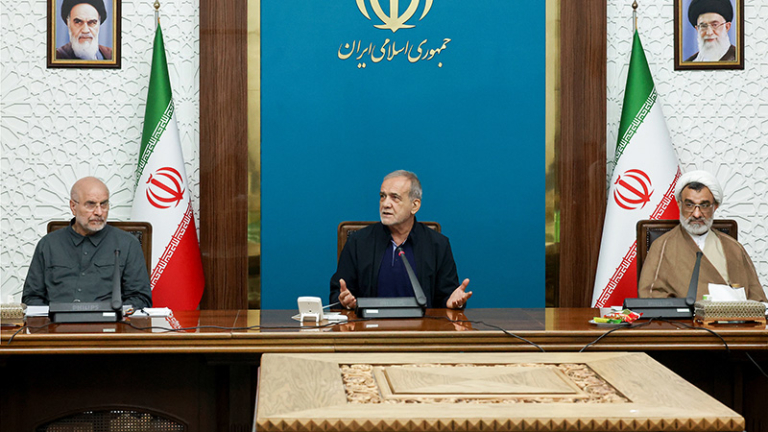
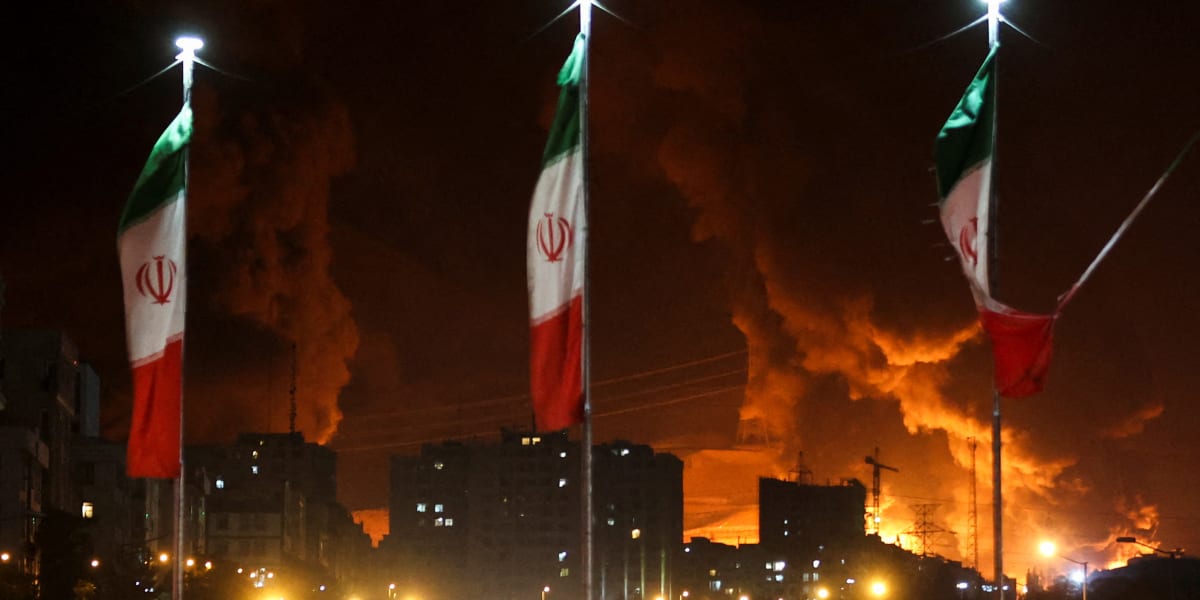
Russia’s 30 September warning that it could use nuclear weapons if NATO tried to isolate Kaliningrad was more than another episode of coercive rhetoric. It attached an explicit nuclear consequence to an undefined action in one of Europe’s most compressed military theatres. A naval interception, sanctions dispute, airspace incident or reinforcement movement could be described by one side as defensive enforcement and by the other as the beginning of a blockade.
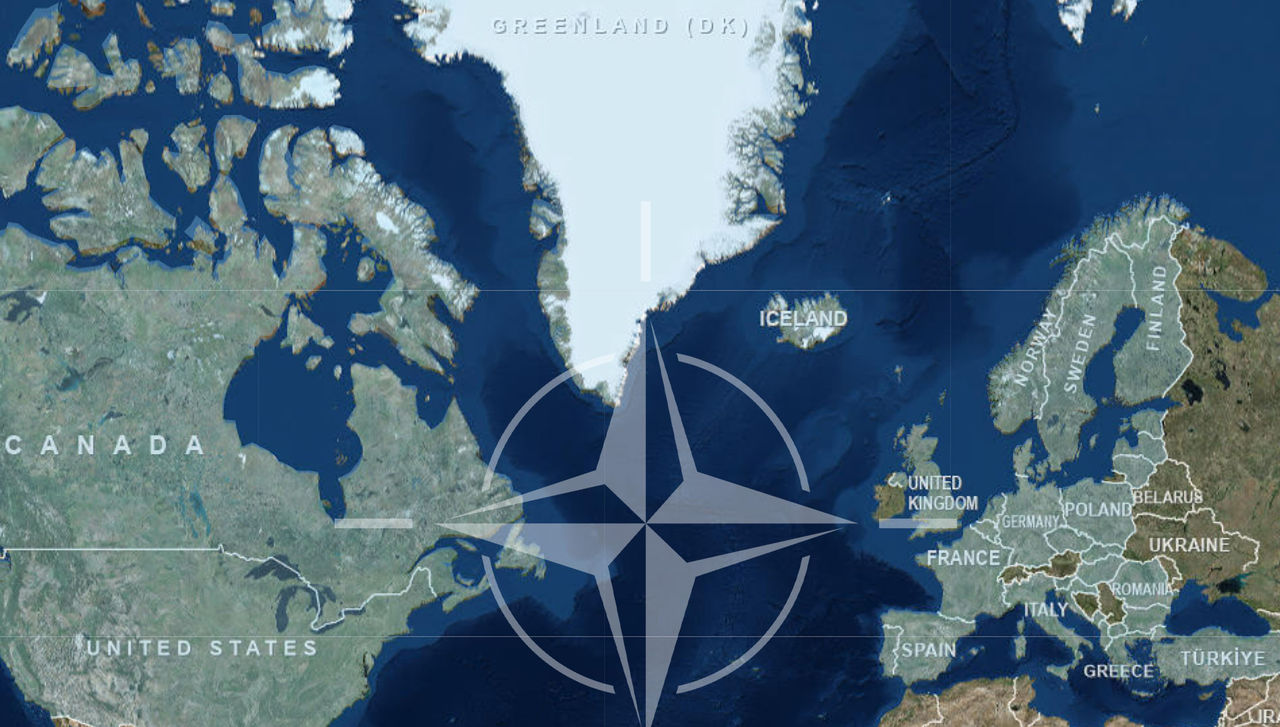
Kaliningrad concentrates several risks in a small area. The Russian exclave lies between Poland and Lithuania, faces a Baltic Sea increasingly bordered by NATO members, and hosts the Baltic Fleet and layered air, missile and coastal-defence forces. The nearby Suwałki corridor is NATO’s only land connection from Poland to Lithuania and the other Baltic states. Russia worries about access to Kaliningrad; NATO worries about access to its Baltic allies. Measures designed to protect one line of communication can threaten the other.
The nuclear dimension is dangerous because capability and intention are difficult to separate. Kaliningrad hosts dual-capable systems, including Iskander missiles, while open-source analysis has identified a modernised storage site that could support nuclear operations. Public evidence does not establish whether nuclear warheads are permanently stored there. In a crisis, however, movements associated with readiness, dispersal or protection could resemble preparations for use. NATO would have to interpret those signals while also defending exposed territory and preserving political control.
Article 5 does not remove this uncertainty. NATO must assess an armed attack case by case, consult among 32 Allies and decide by consensus, even though individual members can act immediately in self-defence. These mechanisms provide legitimacy and restraint, but a Baltic confrontation could move faster than a shared political interpretation. Local commanders may face minutes; national capitals may need hours; the Alliance may require longer to distinguish an accident, a hybrid operation and the opening phase of a coordinated attack.
NATO therefore needs escalation control as an operational capability, not a diplomatic afterthought. Allies should agree in advance how they will distinguish sanctions enforcement from military isolation, define the indicators that would change their assessment of Russian nuclear readiness, and prepare reversible responses for ambiguous incidents. They also need resilient reinforcement routes, protected civilian access, secure crisis communications and exercises that force political leaders to make decisions under incomplete information. Deterrence in the Baltic depends on denying Russia a local advantage without allowing Moscow to turn every protective measure into evidence of an impending siege.
The warning changed the meaning of isolation
The Russian diplomatic message reported by Reuters on 30 September was unusually specific. It said Moscow would be ready to use its entire arsenal, including nuclear weapons, if NATO countries attempted to isolate Kaliningrad from the rest of Russia. It also raised the prospect of strikes against decision-making centres in Alliance states from the outset of a conflict. NATO replied that its exercises and activities did not threaten Russian territory, called the nuclear rhetoric irresponsible and reaffirmed the Alliance’s defensive character.
The immediate temptation is to treat the exchange either as proof that nuclear use is approaching or as another threat that can be discounted. Neither conclusion is justified. Russia has repeatedly used nuclear language to shape Western risk calculations since the invasion of Ukraine. Its revised 2024 doctrine also broadened the circumstances in which Moscow reserves the right to consider nuclear use, including a conventional attack that creates a critical threat to Russian or Belarusian sovereignty or territorial integrity. Declaratory policy is not an automatic launch instruction, but it establishes language that Russian leaders can use to frame a conventional crisis as a nuclear one.
The important word in the September warning was therefore not only “nuclear”. It was “isolate”. The term has no single operational meaning. It can describe restricted rail cargo, intensified customs checks, the interception of a sanctioned vessel, temporary airspace controls, a military quarantine, the mining of approaches or an attack on the transport and military systems that connect the region to Russia. These actions differ profoundly in law, scale and intent. Moscow’s formulation grouped them under a political concept that Russia can define during the crisis itself.
That ambiguity creates leverage. If NATO avoids any measure that Russia might label isolation, Moscow gains room to exploit Baltic routes and intimidate Lithuania or Poland. If NATO ignores the warning entirely, an enforcement or defensive action may be interpreted in Moscow through a nuclear doctrine that emphasises threats to territorial integrity and large-scale aerospace attack. Escalation control begins with refusing this false choice. The Alliance must preserve lawful freedom of action while making the purpose, limits and reversibility of its measures difficult to misread.
Geography creates two competing access problems
Kaliningrad is often described as a Russian spearhead inside NATO territory. That is only half the strategic picture. The region also has the vulnerabilities of an exclave. Land travel to mainland Russia crosses Lithuania and Belarus. Maritime and air connections pass through a Baltic environment in which NATO’s position has strengthened since Finland and Sweden joined the Alliance. In a major war, Russia would have to sustain and protect a heavily militarised region while NATO forces operated from surrounding territory.
The same map produces the Alliance’s own access problem. The Suwałki corridor between Kaliningrad and Belarus is the only land route connecting Poland with Lithuania and, through it, Latvia and Estonia. NATO can also reinforce by sea and air, but those routes would be exposed to missiles, air defence, coastal systems, mines, submarines and electronic warfare based in Kaliningrad and elsewhere. A crisis over access to the Russian region would therefore unfold beside the route NATO needs to sustain the Baltic states.
This symmetry matters. Russia could interpret a NATO build-up around the Suwałki corridor as preparation to cut Kaliningrad’s land connections or suppress its defences. NATO could interpret Russian efforts to secure access as preparation to close the corridor and separate the Baltic states from reinforcement. Both assessments could be internally defensive. Together they can create a mobilisation race in which waiting appears more dangerous than moving first.
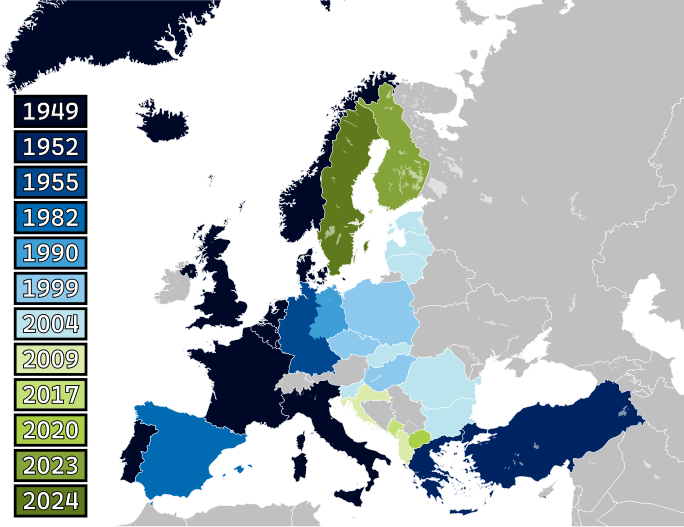
The accession of Finland and Sweden improved NATO’s ability to monitor the Baltic Sea, protect infrastructure and reinforce the region. Baltic Sentry has added frigates, maritime patrol aircraft and naval drones to the protection of undersea infrastructure. NATO has also strengthened forward land forces and command arrangements in the northeast. These changes complicate Russian operations, but they do not turn the Baltic into a risk-free “NATO lake”. Dense commercial traffic, narrow waters, critical cables and pipelines, military patrols and Russian access routes occupy the same operating space. Advantage can improve deterrence while also increasing the frequency of close encounters.
September illustrated the tempo. NATO said Italian aircraft operating from Šiauliai downed a drone that violated Lithuanian airspace on 15 September. Such an incident can be managed when attribution, track history and rules of engagement are clear. In a wider confrontation, the same event could trigger force dispersal, air-defence activation and counter-deployments before political authorities establish whether the violation was deliberate. Geography compresses the interval between observation and consequence.
The blockade label collapses different legal realities
The history of Kaliningrad transit shows why terminology matters. Lithuania controls its own territory and applies European Union law. Special EU arrangements facilitate passenger transit between mainland Russia and Kaliningrad, while sanctions govern the movement of goods. In 2022, Lithuania rejected Russian claims that it had imposed a unilateral ban and said passengers and non-sanctioned goods continued to move. European Commission guidance later clarified that certain essential goods could travel by rail under controls based on historical volumes, while military and dual-use goods remained prohibited.
Sanctions enforcement is not a military blockade. Customs inspections, quantity limits and restrictions on specified goods are exercises of legal authority in peacetime. A blockade in armed conflict is a coercive military operation intended to prevent access to an enemy coast or territory. Naval patrols that protect cables or monitor sanctioned shipping are also not automatically a blockade. The distinctions are clear on paper but vulnerable to political manipulation.
Russia has an incentive to blur them. Describing an inspection regime as strangulation converts an argument about sanctions into a claim of existential defence. It can justify military escorts, threaten the officials conducting inspections and test whether NATO members will support Lithuania under pressure. The 2026 warning extends that logic by attaching nuclear language to the broad condition of “isolation” rather than to a defined armed attack.
NATO should not accept Moscow’s vocabulary, but it should anticipate how specific actions will be portrayed. A temporary exclusion zone around a damaged cable, for example, serves a different purpose from a general ban on Russian shipping. Intercepting a vessel with a documented sanctions violation differs from closing the sea lane. Restricting military cargo differs from obstructing food, medicine or passenger travel. The operational order, public explanation and diplomatic notification should preserve those distinctions from the start.
Civilian continuity is especially important. Maintaining clearly monitored channels for lawful passenger traffic and essential supplies would make it harder for Russia to claim that defensive measures amount to collective punishment. It would also give NATO reversible options between routine enforcement and unrestricted access. Escalation control works best when restraint is visible in the design of the operation, rather than added after a confrontation has begun.
Dual capable forces turn movement into a message
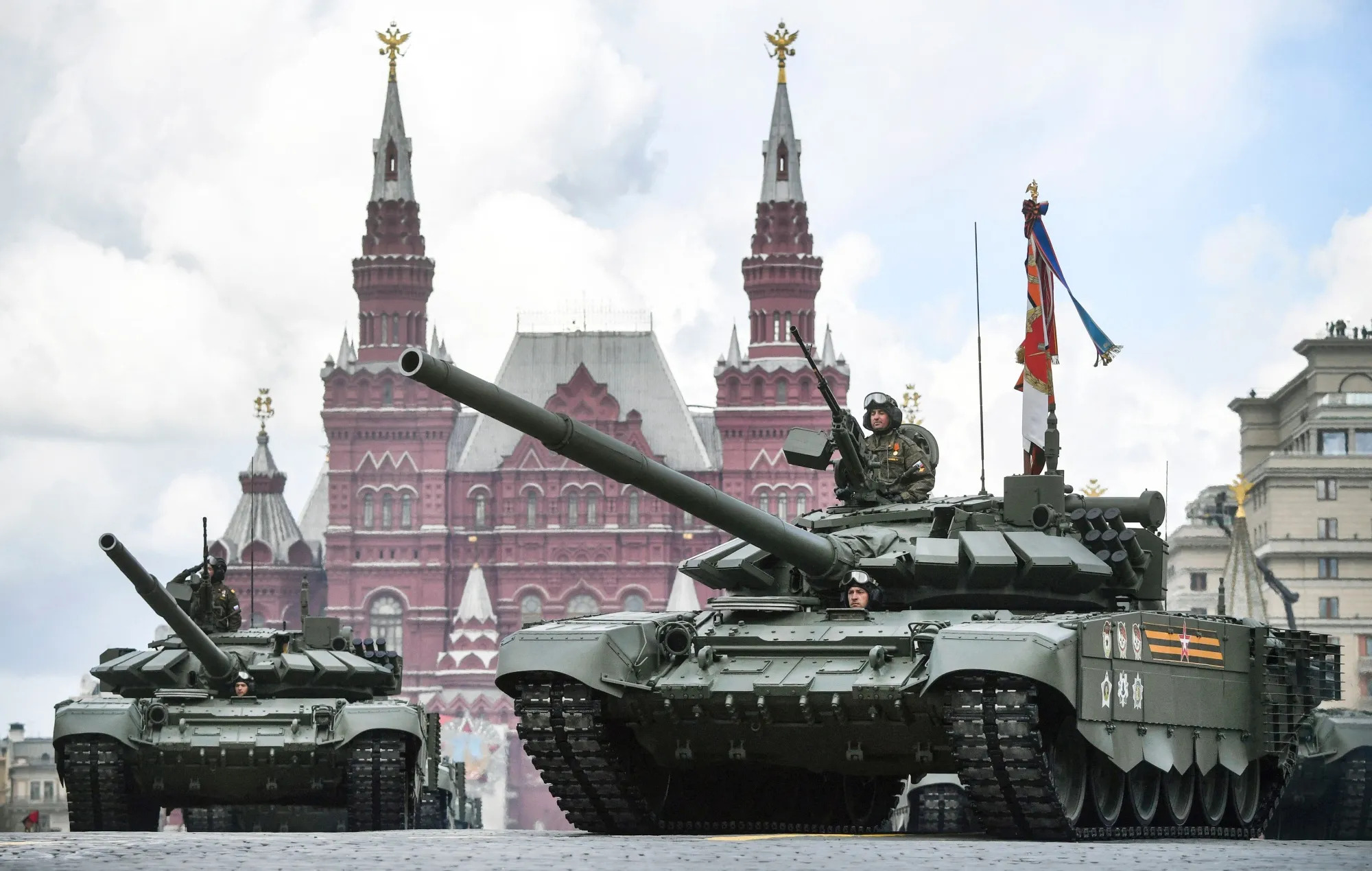
Kaliningrad’s military value comes from the concentration of forces close to NATO territory. The region hosts the Baltic Fleet, air bases, integrated air defence, coastal-defence weapons and the 152nd Missile Brigade equipped with the Iskander system. Several Russian systems can carry conventional or nuclear payloads. This dual capability allows Moscow to change the political meaning of a deployment without necessarily changing the launcher that NATO observes.
Open-source satellite analysis by the Federation of American Scientists identified extensive upgrades at the Kulikovo storage site and assessed that it could support dual-capable forces. The analysis did not establish whether nuclear warheads were present. It also noted Russia’s longstanding claim that non-strategic nuclear warheads are kept in central storage, which leaves open the possibility that a regional facility would receive them only in a crisis. The uncertainty is strategically consequential. NATO may detect activity but remain unsure whether it reflects routine security, conventional readiness or nuclear preparations.
The Iskander problem illustrates the danger. Dispersing launchers can protect conventional strike forces from attack. Moving specialised security units or transport vehicles may suggest a higher readiness state, but individual indicators are not conclusive. Russia could deliberately expose some movements to signal resolve, conceal others to preserve surprise, or create false indicators to divide Allied assessments. NATO would have to decide whether to disperse its own aircraft and command nodes, raise nuclear consultation, or strike threatening conventional systems if hostilities had begun.
Those defensive steps would be observable to Russia. Dispersed NATO aircraft, intensified intelligence flights, missile-defence activation and long-range fires moving into the theatre could be read as preparations to disarm Kaliningrad. Russia’s 2024 doctrine explicitly lists reliable information about the launch of a mass aerospace attack among the conditions relevant to nuclear use. A mixed force of drones, cruise missiles, aircraft and conventional precision weapons therefore creates an interpretation problem before any nuclear weapon is visible.
Nuclear ambiguity is useful to Moscow because it forces NATO to account for the worst case. It is also dangerous for Russia. A signal intended to frighten the Alliance may look like a narrowing window for preventive action. A launcher dispersed for survival may be tracked as an imminent threat. The tripwire is not a mechanical device that guarantees nuclear use. It is a chain of uncertain observations in which each side has reasons to move before certainty becomes available.
A local incident can outrun political interpretation
Consider a plausible sequence. Damage to an undersea cable near a Russian-linked vessel leads several Baltic states to establish a temporary security area and inspect nearby shipping. Russia sends an armed escort and announces that NATO is preparing to close Kaliningrad’s maritime access. A collision, warning shot or drone overflight injures personnel. Poland and Lithuania strengthen air defence and move units to protect ports, the Suwałki corridor and critical infrastructure.
Russia responds by dispersing Iskander launchers, activating coastal missiles and increasing combat air patrols. Electronic interference affects civil aviation and military communications. NATO reinforces the Baltic states and deploys additional maritime forces to keep sea lines open. Each step has a defensible purpose. Viewed from the other side, the combined pattern resembles preparation for offensive operations against Kaliningrad or a Russian attempt to sever the Baltic states.
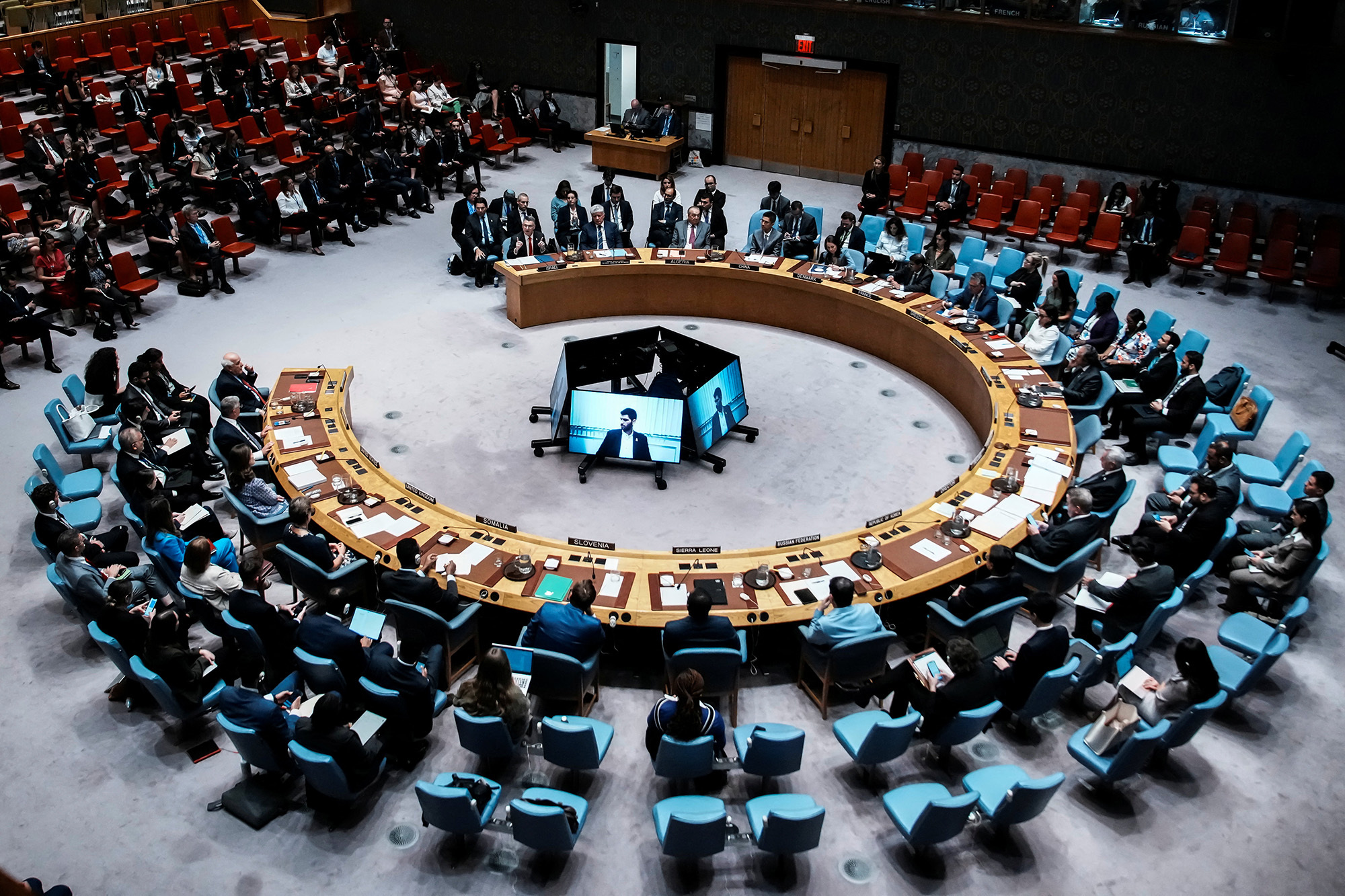
The political problem develops at three speeds. Tactical commanders must protect forces and civilians within minutes. National governments must attribute the incident, decide whether it was accidental or directed, and authorise additional measures within hours. NATO must build a common assessment, consult in the North Atlantic Council and decide by consensus. Article 5 is flexible: an armed attack creates an obligation for each Ally to assist with the action it deems necessary, and the Treaty does not prescribe one rigid triggering procedure. That flexibility is valuable, but it does not make the facts self-interpreting.
Hybrid tactics exploit the gap. Sabotage conducted through intermediaries, spoofed navigation, unmarked drones or a vessel operating under a commercial flag can produce damage without a clean attribution chain. Allies may agree that the incident is hostile while disagreeing about whether it constitutes an armed attack, who directed it and what response is proportionate. Russia can use that debate to establish a new local fact, present NATO reinforcement as escalation and introduce nuclear signals before the Alliance has chosen a common description of the opening event.
Consensus is not synonymous with paralysis. NATO consults continuously, maintains crisis procedures and can make decisions rapidly when governments share an assessment. Individual Allies also retain the right of self-defence. The risk is that an adversary will design the incident precisely to keep assessments from converging. In that setting, political control depends on preparation: shared indicators, standing legal analysis, secure communications and response options that do not require leaders to invent policy under fire.
Nuclear signalling is leverage rather than a countdown
NATO should treat Russia’s warning seriously without treating every threat as evidence of an imminent strike. Nuclear coercion works by changing the opponent’s calculation of risk. Moscow wants European governments to ask whether a shipping inspection, reinforcement convoy or conventional strike against a missile battery is worth even a small chance of nuclear escalation. Repetition can make the threat seem routine, but dismissing it completely would give rhetoric no analytical value at the moment when posture actually changes.
The correct response is to separate declaratory threat, military capability and operational preparation. Public statements reveal the political frame Russia wants NATO to adopt. Dual-capable systems establish options. Observable changes in command arrangements, storage activity, specialised transport, force protection, communications and leadership behaviour may indicate movement toward employment. No single indicator is decisive. A combined and sustained pattern matters more than a speech or one vehicle movement.
NATO’s own nuclear policy emphasises political control and consultation through the Nuclear Planning Group. Its public position is that the circumstances for nuclear use are extremely remote, while an adversary’s nuclear use would fundamentally alter the conflict. That message should remain firm. Mirroring every Russian warning with a new public threat would reward Moscow’s effort to make the crisis nuclear at the earliest stage.
Restraint should not imply that Russia can create a sanctuary for conventional aggression by placing dual capable systems in Kaliningrad. NATO must retain the ability to defend Allied territory, suppress attacks and reinforce the Baltic states. The challenge is to communicate that conventional military actions will be limited to defined defensive objectives, while leaving no doubt that nuclear use would fail to secure a favourable end to the conflict. Deterrence requires resolve; escalation control requires boundaries that the adversary can perceive.
NATO needs a Baltic escalation control architecture
The first requirement is a common vocabulary. Allies should agree privately on what actions they would regard as sanctions enforcement, maritime protection, partial military isolation and a blockade. These definitions should connect to legal authorities, rules of engagement and notification procedures. Agreement on terms will not bind Russia, but it will prevent Moscow’s language from becoming the default frame inside the Alliance.
The second requirement is early political consultation. Article 4 exists for threats to an Ally’s territorial integrity, political independence or security; it should be used before an ambiguous Baltic incident hardens into an Article 5 debate. Pre-drafted decision papers should set out the evidence required for successive measures, the authorities national commanders already possess and the questions that must return to the North Atlantic Council. Leaders need options that can be approved in minutes or hours, not only plans for a fully recognised war.
The third requirement is a ladder of reversible military responses. Additional surveillance, escorted transit, dispersed air defence, protected reinforcement and temporary security zones can strengthen denial without immediately closing Russian civilian access or striking the exclave. Each measure should have a stated objective, geographic limit and review point. Reversibility allows NATO to protect its position while testing whether Russian behaviour changes.
The fourth requirement is resilient access. NATO cannot manage escalation from a position in which one disruption threatens to isolate the Baltic states. Rail, road, port and airfield capacity should be dispersed, repaired quickly and supported by pre-positioned stocks. Maritime reinforcement plans must account for mines, missiles, electronic warfare and damage to civilian infrastructure. Stronger access reduces pressure for early, large and potentially ambiguous operations against Kaliningrad.
The fifth requirement is an agreed nuclear indicator framework. Intelligence services should fuse national reporting into a shared assessment of changes in Russian dual-capable forces and identify which combinations would trigger Nuclear Planning Group consultation, protective dispersal or changes in readiness. The aim is not to automate escalation. It is to reduce the chance that capitals interpret the same movement in incompatible ways while time is running out.
The sixth requirement is protected communication. NATO and Russia need channels capable of clarifying the location and purpose of military activity during a Baltic incident, even when normal political relations are frozen. Notifications cannot eliminate deception, but they can establish whether a temporary zone, exercise or convoy has a limited purpose. Military-to-military communication should be backed by public messaging that avoids claims broader than the action being taken.
Finally, exercises must test political ambiguity as rigorously as military movement. Scenarios should begin with incomplete attribution, commercial vessels, civil disruption and conflicting intelligence rather than a clearly marked invasion. Ministers and senior officials should practise Article 4 consultation, nuclear indicator assessment and decisions about reversible options while commanders operate under time pressure. An escalation plan that exists only in military headquarters will fail if political leaders encounter it for the first time during the crisis.